Showing posts with label Literary Prizes. Show all posts

Tuesday, January 27, 2009

RIP America's Most Overesteemed Writer

Fosco Lives! bids a fond farewell to John Updike, known around these parts as The Most Overesteemed Man in American Letters. Updike is well-known for anthropomorphizing bunnies, making sex repulsive, and, well, being John Updike.

Fosco has read several of Updike's novels and each one is more unbearable than the last (especially his gimmicky "home-grown American terrorist" novel). This is not to say that Updike was talentless. Fosco does recall one or two short stories that were pretty good. And Updike's art criticism is pretty decent, especially his meditation on Renoir:

Renoir does not quite rank with the heroic masters of early modern painting--specifically, with his friends Monet and Cézanne. Compared with either, he didn't look hard enough. He saw what he wanted to see, and turned it as he aged into an inward vision, a mythology. [...] The brushstrokes turn greasier, the colors rawer, the drawing vaguer. In the end the people all look Mexican.
This is a critical bullseye, I would say, but we must remember that an occasional perceptive comment should not make one into a titan of American letters (deserving of a front page NYTimes obit).

So how did Updike come to be so overesteemed? The definitive history of this phenomenon is yet to be written; however, Fosco suspects it has something to do with the 1960s-70s and suburban adultery.

Updike had held the title of "Most Overesteemed Man in American Letters" since the death of Norman Mailer in 2007. Mailer had held the title for almost twenty years, with a brief hiatus from 1996-1999 when David Foster Wallace held the distinction.

Who does the title pass on to now? Unfortunately, David Foster Wallace is dead, as is Hunter S. Thompson. Robert Olen Butler may overly esteem himself, but I'm not sure anyone else likes him at all. Philip Roth and Don DeLillo are both highly esteemed, but deservedly so, in Fosco's judgment. Similarly, I think Cormac McCarthy could not be overesteemed. Are there any women who qualify? (After all, this title doesn't have to go to a man.) Again, Fosco believes that the esteem for Toni Morrison is entirely justified.

Richard Ford is a possibility, but he's actually pretty good and people don't really talk about him much anymore. We are probably going to have to go down one tier to find our new titleholder. In the second tier, I think Jeffrey Eugenides is a strong candidate. But instead, I am going to award the title of Most Overesteemed American Man of Letters to Michael Chabon. Chabon is a Pulitzer Prize-winner (for a ridiculously bad novel about comic books), as well as a promoter of stupid genre fiction. He has scraggly rock-star hair.

Congratulations, Michael Chabon! May you continue to be scandalously over-rated for many years to come.

Sunday, October 15, 2006

Maybe next year, Joyce...

The first few weeks of October are both exciting and frustrating for Fosco. As the Nobel Prizes begin to trickle out of Stockholm, he has to put with the almost daily announcements of useless awards (like Physics or Medicine) until they finally get around to the Literature award.

Fosco loves the Nobel Prize in Literature (as he loves most other literary awards). Actually, the thing that Fosco loves most about the Nobel Prize in Literature is handicapping it. Who will win? Who should win but won't? Who might win but shouldn't?

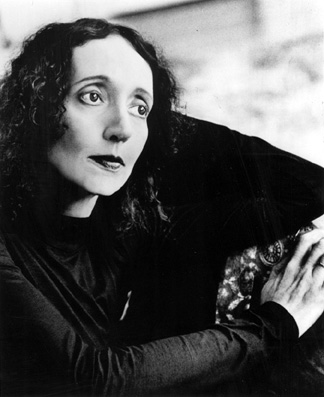
To tell you the truth, Fosco's favorite thing about the Nobel Lit Prize is the perrenial presence of Skeletor, er, Joyce Carol Oates on the media's "shortlist." Yes, our JCO is Literature's Susan Lucci, tapped by both the newsmedia and the betting books (yes, you can bet on this!) as one of the heavyweights for the last several years. JCO's annual candidacy has even led the editor of the JCO infosite to provide this tart reply. Personally, I doubt that JCO will ever win the Nobel Prize for Literature, for the following reasons:

  • She teaches at Princeton with previous Nobel Laureate Toni Morrison (Winner in 1993). How many Literature Nobels are they going to throw at Princeton?
  • She's written somewhere in the neighborhood of, oh say, 6500 books and yet, NO ONE I know has read one of her novels. (Fosco has read more of her novels than he would care to admit, but all against his will. Ask him what that means, sometime.)
  • She's written (by a conservative estimate) about 9,740 books. Every time you look away, another book by her appears on the "New Books" table. Can the Nobel Committee really come to terms with that kind of oeuvre? Do they care to?
  • Although she's written roughly 4200 books, a close reading reveals that she's actually written the same 5 books, 840 times each. That's something I expect the Swedish Academy to notice. Eventually.
  • There's that whole mess with her accusing James McGreevey of killing all those teen vagrants. Stockholm doesn't really like teen sex killings.

So who did win? Some Turkish guy. Actually, to be more accurate, it's some Turkish guy who has faced political repression (a lil' bit) in his home country. Huh. Well, at least the Nobel Committee isn't predictable or anything.

So who should have won? Actually, I'm fine with Pamuk winning. I've never read his stuff, but it seems to review well. I mean, if Margaret Atwood thinks it's okay who am I to argue? (Atwood herself is something of a gunner for the Prize, eh?)

Next year, I'd love to see it go to Salman Rushdie (especially if the Academy really wants to make a statement about creative freedom) or Haruki Murakami (cuz I like him).

Actually the writer I think most deserves it (as he is certainly the best living writing working in English) is Philip Roth. However, he will never win it. Never. Why not? Because I don't see another American Jewish man (who writes about aging American men) winning. It turns out that Saul Bellow won the Nobel Prize that should have, thirty years later, gone to Roth. Time plays such cruel jokes.

Don't worry, Joyce--you still have that cushy gig at Princeton, even if Toni makes fun of you behind your back. And, as this post proves, you don't need to have a Nobel to do that...

Friday, September 15, 2006

The News from Paraguay: "Continued mortgaging the country" is a problem.

We are approaching the season of some of the serious literary awards and Fosco has a confession to make: he likes the big literary prizes. There is no easier way to snag his interest in a book than to mention that it won the Pulitzer, the National Book Award, or the Booker Prize. Er... I mean the Man Booker Prize. Even some of those oddly-named PEN awards can be worthy of notice.

Fosco is also immediately interested in any book that receives more than "three paws up" from Piper. Be warned: fewer than three paws up is just a waste of your time.

The reason that Fosco enjoys these awards is that he doesn't take them too seriously. It seems silly to believe that the National Book Award could really mean that the winning book was the best book of that year. What would that even mean? Rather, Fosco takes these awards as saying something like this: "We, a committee of well-educated, well-read people who pay attention to the world of letters, would like to suggest that the following book or books is probably worth your time." If you think about the awards in this way, it frees up a lot of potential anger and resentment that can then be applied elsewhere (ideally, towards the elderly).

Speaking of anger and resentment, remember all that nastiness over the 2004 National Book Award? That was the year that love-him-or-hate-him author Rick Moody was the chair of the panel and the nominees were 5 women who

  • all lived in NYC
  • had sold less than 2500 copies each
  • no one had ever heard of (and by no one, I mean: anyone who subsequently wrote a resentful criticism of Moody's choices).
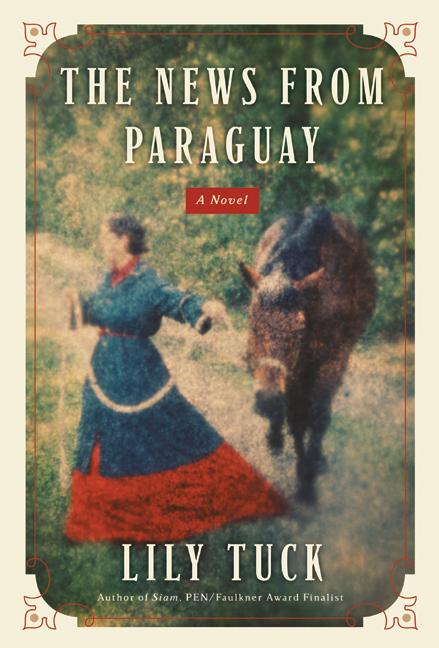
In the end, I felt bad for eventual winner Lily Tuck and her novel, The News from Paraguay. After all, I imagine that she felt like she hit the lottery even to be nominated over heavy hitters like Philip Roth (considered by Fosco to be our greatest living writer). And then, to actually win the award, only to have her book remembered as "that undeserving book that Rick Moody promoted because of his own weird literary agenda." The whole thing has the flavor of a "your wish has been granted, but with an unpleasantly ironic loophole--ha ha!" and that makes me feel a bit sorry for Lily Tuck.

But, even though I felt sorry for her, I had no intention of reading the book. After all, it's about Paraguay--an afterthought of a country on an afterthought of a continent. And even worse: it's about Paraguay in the 19th Century! I would have bet a large amount of money that Paraguay didn't even exist in the 19th Century (and I would have lost...) Maybe this makes me a First-World Chauvinist (although, I have read historial novels about India, China, and Africa--so maybe my chauvinism is limited to South America).

But then, several months ago, I came across a sad sight: an entire stack of hardcover copies of The News from Paraguay (first printing!) on remainder at a bargain bookstore. No National Book Award winner should suffer this fate, no matter its shortcomings (isn't there something the National Book Foundation can do to prevent this?). I was moved to purchase a copy, just to make the pain go away. And then, last week, mainly because it was there (and it did win a National Book Award), I picked it up and read it.

And you know what? It's actually really good. Luckily, the novel doesn't require you to learn much about historical Paraguay or even to care much about Paraguay (which is good, because I wasn't going to do either). Rather, by recounting brief vignettes (kaleidoscopically, I think the reviews said) with a gently irony (reminiscent of my beloved Penelope Fitzgerald), Tuck illuminates everyday emotional life, with its mixture of venal absurdity and pitiful sincerity. It's sweet and sad and occasionally sexy and I was moved by it. Was this the best novel of 2004? I don't care--I'm just glad that I finally got around to reading it.

And as for the news from Paraguay, according to a Babel Fish translation of one of the stories in today's Ultimo Hora:
"IT IS NOT POSSIBLE TO BE CONTINUED MORTGAGING the COUNTRY", INDICATES the PRESIDENT Of the CONGRESS We rejected the orders of the Executive authority because the guarantee sufficient does not exist to administer that money, the holder of the National Congress declared. The oviedista senator Enrique González Quintana made these declarations during a meeting of leaders of large stone benches of the Senate, occasion in which the reasons were explained that motivated the decisions taken yesterday in the Legislative Power.
All I know is that I would lurve to see all those "leaders of large stone benches." Do you think they're animate? Even if not, Paraguay still probably has a better democracy than we do.