Showing posts with label theory. Show all posts

Tuesday, March 31, 2009

Autism, Visual Thinking, and Justifying the Humanities

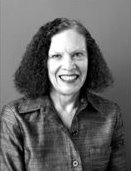
You may recall that Fosco has been interested in the question of whether Ben's cat Isis (and all cats, for that matter) is essentially autistic. Fosco got this idea from animal researcher Temple Grandin, who is herself autistic and finds that her condition allows her to understand animals better than neurotypical observers. (Additionally, Fosco is actually pretty impressed with Dr. Grandin's jaunty style, as seen in accompanying picture.)

Well, a couple of weeks ago, Fosco picked up (at his local library!) one of Grandin's books, Animals in Translation. Grandin makes some pretty fascinating claims in the book, relying on both her experiences and insights from neuroscience. For one thing, she provides a model of animal perception that can account for some of the stranger aspects of animal behavior (although not all of them--she still can't explain why slowly-moving fans creep out cows).

One of Grandin's claims is that she and animals both think entirely in pictures (this is not a surprise for animals--what else would they think in? Words?). Grandin tries to explain what it is like for her to do complex human cognition entirely in pictures. It all sounds completely horrible to Fosco, who is highly verbal and cannot imagine trying to do justice to Derrida or Levinas without making use of words and abstract concepts. However, Grandin wants to argue that there are indeed benefits to entirely visual thinking:

Other times thinking in pictures is an advantage. During the 1990s I knew all the dot-coms would go to hell, because when I thought about them the only images I saw were rented office space and computers that would be obsolete in two years. There wasn't anything real I could picture; the companies had no hard assets. My stockbroker asked me how I knew the two stock market crashes would happen, and I told him, 'When the Monopoly play money starts jerking around the real money you're in trouble.'
This is a cute story, of course (although maybe not one I would have left in the manuscript were I Grandin's editor). I suspect that Grandin may have profited handsomely from our recent economic troubles as well--there are certainly no good mental pictures that can represent hedge funds and credit default swaps (although: most of this bubble seems to have been based on the housing market and houses are indeed "real" and easily pictured).

But I think this anecdote raises an interesting question: in what ways is it possible to value non-concrete (i.e., not easily pictured) things? Sure, the original dot-com bubble did burst; however, this didn't mean that the web itself is completely worthless. There are still plenty of companies that are "nothing" but office space and soon-to-be-obsolete computers (like Google, perhaps)--and while Google may (or may not) be overvalued, the services it provides are not valueless.

And yet, at the same time, there is clearly an anxiety about the possibility of valuing things like knowledge, information, content, etc.--and not just for autistic people or visual thinkers. As someone who is (supposedly) in the "knowledge business," I think these issues are worth meditating on, especially as the humanities are increasingly called upon to "justify their worth" in the modern world.

You can purchase several Temple Grandin books by following these links.


Fosco will receive a small percentage and will be grateful.

submit to reddit
submit to reddit

Monday, March 16, 2009

Coming Soon: Soleil Moon Frye's Philosophical Ontology

Fosco is completely exhausted and maybe a little ill after a weekend of working hard and playing hard. Because he has no energy today (and still some work to finish), he's going to postpone "Music Monday" until tomorrow--at which point it will become "Muesic Tuesday" or something like that.

For your Fosco Lives! pleasure today, I can offer you this brief anecdote. Yesterday (Sunday) afternoon, Fosco decided that he needed a specific academic book immediately for his paper-in-progress. The book is Basic Philosophical Writings by Emmanuel Levinas. The cover looks like this:

Because Fosco was in Daly City at Oz's place, the UCSC library was not a good option. Fosco decided that the most likely bookstore on the entire SF Peninsula to carry this book would be the Stanford bookstore in Palo Alto. Fosco called and reserved the book at said Stanford bookstore (they had it in stock!) and stopped by Palo Alto on the way to visit a friend in Santa Clara. I won't go into details about the difficulty of locating the Stanford bookstore (just know that it was hard).

Once inside the bookstore, Fosco went to retrieve the book from the Information Desk. That's where he had the following conversation:

FOSCO: You're holding a book for me?
MIDDLE-AGED LADY EMPLOYEE: What's your name?
FOSCO: [gives his name]
EMPLOYEE: [fetches book from shelf, glances at the cover.] Emmanuel Lewis?
FOSCO: [assuming that she's making a (pretty clever) joke] Something like that.
EMPLOYEE: [looks at cover again] Oh! Emmanuel Levinas! I read it wrong.
FOSCO: That's okay, I think that's funny. [starts to walk away]
EMPLOYEE: [calling out after Fosco] "Whatchu talkin bout, Willis?"

I think there are numerous lessons that we can learn from this interaction:

  1. A book's cover design is key--splitting the author's name into two separate fonts that point in two separate directions is a recipe for disaster.
  2. People tend to confuse Emmanuel Lewis and Gary Coleman (or, even worse, tend to assimilate Lewis completely to Coleman).
  3. TV's "Webster" lacked the necessary sassy catchphrase that would have made the show memorable twenty years later.
I can already imagine the LOLtheorists pix that some of Fosco's loyal readers will submit... Todd?

Tuesday, March 10, 2009

LOLtheorists Returns!

Sunday night (well, actually Monday morning), Fosco took this late-night study break while reading French philosopher Jean-Luc Nancy. See, the joke is that J-L Nancy's surname is easy to confuse (in English) with the dwarven heroine Nancy in the eponymous comic strip. After all, Fosco is using a lot of J-L Nancy in his academic work; and at the same time, the classic comic strip "Nancy" is always worth a read:

Both Nancys are good reads, although whether "Nancy" or J-L Nancy is more incomprehensible is an open question (especially considering the above strip).

Well, it seems that all of this "fun with Nancy" inspired the inimitable Todd to perform a resurrection of Fosco's once-popular feature, LOLtheorists. Here is Todd's laugh-out-loud depiction of Jean-Luc Nancy as an LOLtheorist:

Well done, Todd. I love it.

If you care to read Jean-Luc Nancy, there are two of his works that are aimed at the general reader and that offer reasonably accessible descriptions of Nancy's project of "The Deconstruction of Christianity." You could purchase them here:

Monday, March 09, 2009

Late Night Study Break!

Fosco is up late tonight (although it's now "this morning") trying to make some sense of a very difficult Nancy text. No, not this one:

You done got told, Betch!

Sunday, March 08, 2009

Your Sunday Fantasie

Fosco loathes this half of the time change dyad. "Losing" the hour plays too much hell with Fosco's sleep schedule. I wish we could live in a world where we always "fall back" one hour in the fall, but never "spring forward" the next spring. Of course, this would eventually result in darkness at noon and other unpleasantnesses. Alas.

So to ease your bleary eyes this time-change Sunday, Fosco offers a gorgeous painting. This painting caught Fosco's eye several years ago as he was speed-walking through the "Americans in Paris" exhibit at the Met Museum. It took my breath away.

The painting is by Charles Sprague Pearce (1851-1914) (no relation to Charles Sanders Peirce, although they were contemporaries). Pearce was born in Boston, but lived and worked in France after 1885. In his work, he was something of an Orientalist (ya think?), so naturally he received the French Légion d'honneur. This painting, titled Fantasie was finished circa 1883 and resides in the collection of the Pennsylvania Academy of the Fine Arts.

There is not a lot of academic work that Fosco can locate on Charles Sprague Pearce, but interestingly enough, there appears to be something of a disagreement about this painting. The Americans in Paris 1860-1900 catalogue essay for this painting identifies the subject as a boy. However, Aisla Boyd, writing in the Journal of Victorian Culture, disagrees:

Strangely Charles Sprague Pearce's Fantasie is identified in the catalogue and labelled as a young boy wearing a woman's kimono, but is more obviously a woman. Her cupid's bow mouth, hint of bosom under the beautiful silk, smooth skin and hair drawn back like a bob, contrast most dramatically with the firmly held samurai sword--the fantasy is that of the femme fatale rather than cross-dressing.
I think this is a faulty reading of the portrait.

Of course, the only way to resolve the question of the sex of the portrait subject would seem to be finding some sort of historical evidence that establishes the sex of Pearce's model (like a letter or journal entry). However, even that type of evidence would still leave open the question of the sexual ambiguity of the subject--regardless of whether or not said subject is "actually" a boy or a woman. After all, Boyd sees "obviously" a woman, while others see a boy. Clearly, this painting is not meant to evoke a stable representation of sex (either male or female). If there is one thing that's obvious about this painting to me, it's that the sex of the subject is not obvious.

Consequently, I want to read this painting as a queer painting. Think about it: either way, this painting is attempting to mess with sex roles. If it's a boy (and I think it probably is), why is he so feminized? Why is he wearing a woman's kimono? If it's a woman, why is she masculinized as a samurai? (I'm sorry, there is nothing of a femme fatale here--I think that's a ludicrous reading.) Either way, this painting is about some aspect of cross-dressing (which is its fantasie, right?). Boyd's reading of the painting tries too hard, I think, to unqueer a very queer painting--to establish a conventional alibi for what is a sexually subversive work of art.

If you are interested in the catalogue for this exhibition, you can purchase it here:

Sunday, March 01, 2009

Would You Take a Job at UCSC?

Fosco has to get up early tomorrow morning to make it to campus for a one-time seminar with a seriously important academic superstar. Said academic superstar is visiting UCSC tomorrow for a job interview in the History of Consciousness department and will be leading a seminar in the morning and giving a job talk in the afternoon. This is kind of exciting, especially since this academic superstar has done pretty important work in Fosco's specialty of queer theory.

And yet, as Fosco preps for this seminar, he can't help wondering: why would this scholar want a job at UCSC? Not that UCSC is Florida State or anything; but this scholar currently holds an endowed chair at the University of Chicago, one of the best universities in the country in one of the best cities in the country. Of course, it's entirely possible that this scholar is not realistically considering a job at UCSC and is hoping for this job offer as a bargaining chip to get a better deal from Chicago (sadly, that's the way the academic game is played). But assuming this scholar is actually interested in a job at UCSC, one might wonder what type of calculus goes into these kinds of decisions.

Just as an exercise in analysis, let's consider the comparisons:

  • Location: Chicago v. Santa Cruz seems like a pretty easy choice; but let's consider that this scholar, like most of the major faculty here, would most likely live in San Francisco. Chicago v. SF is a much tougher call, especially if you take into account the difference in weather.
  • Salary: UCSC will presumably be willing to pony up some cash here. But will University of Chicago be unwilling or unable to match it? I doubt it. In general, private schools (like Chicago) should be able to outspend public schools (like UCSC).
  • Prestige: There is no question that U of C is much more prestigious institution--by a lot. However, this gap closes a little when you consider that the "History of Consciousness" department at UCSC has a pretty sexy academic reputation. Some of the most interesting and innovative contemporary thinkers in academia have been associated with this department over the years. Who wouldn't want to be in the (virtual) company of people like Hayden White, Donna Haraway, and Norman O. Brown?
  • Resources/Facilities: UCSC is a public school in the middle of a major budget crisis. University of Chicago is a private institution with a largish endowment. Things here are pretty bleak financially; things there are, I would think, much better.
  • Students: I don't want to be too harsh on the undergrads and grad students here at UCSC--many of them are first-rate (including people like Mere who any university would be lucky to have). But there is no question that U of C typically attracts higher quality students (on average).
Which means, I would have to think, that a decision to take a job at UCSC must be primarily about San Francisco or its weather (or some combination of the two). Of course, this is all speculation and there could be plenty of idiosyncratic reasons for preferring one job or institution over another. However, this kind of academic job-related decision-making process has always been quite fascinating to Fosco.

Tuesday, January 27, 2009

Author Trouble: Baseball Edition

Authorship is a vexed question, my friends. You may have seen the news that your avuncular grandfather, Joe Torre, has written a vengeful book about his time managing the Yankees. ESPN loves this story, and why not? Torre taking shots at A-Rod? That's golden delicious. Except that maybe Torre didn't--at least, not in the way that ESPN thinks.

You see, it's complicated. According to reports, Torre is only the coauthor of the book:

The book, "The Yankee Years," debuts Feb. 3. It is co-written by Sports Illustrated writer Tom Verducci. It is published by Doubleday. While Torre is the co-author, the book contains both his thoughts and independent reporting, according to Verducci.
Well, so it seems that the book is a hybrid between Torre's memories and Verducci's "independent reporting." Except that doesn't actually seem to be the case either:
"I think it's important to understand context here. The book is not a first-person book by Joe Torre, it's a third-person narrative based on 12 years of knowing the Yankees and it's about the changes in the game in that period," Verducci told [SI.com].
So Torre's contributions are not in the first-person. And in fact, there appear to be a lot more than Torre's reflections at work here:
The book is not a first-person tell-all, but rather, a third-person narrative by Verducci, who interviewed dozens of players and team personnel while researching for the book, the source said.
Now this all sounds straightforward, right? This isn't a Joe Torre score-settling book; rather, it's a sober third-person account of the Torre's Yankee years based on Verducci's reporting and numerous interviews within the organization.

So clearly ESPN (and other news outlets) have been making too big a deal about this book, right? Well, except the book isn't quite your normal third-person journalistic report either, because Joe Torre is the coauthor. This is what makes it all so strange. Is this a tell-all book by the former Yankees manager? Apparently not. But clearly the former Yankees manager has a responsibility for the contents beyond just being interviewed for the book. As an author, Torre must have some responsibility, even for the "third person" parts, right? And I think that's what confuses everyone (ESPN included).

Like I said, authorship is a vexed question (and you don't need Derrida to tell you that).

Sunday, November 02, 2008

Things You Should Know

Here's one of those "miscellaneous" posts, in which Fosco points you toward interesting titbits of information from the last few days.


N.B., for the next two (nail-biting) days, Fosco has embedded the widget from the brilliant poll-crunchers at fivethirtyeight.com (see the embed at top left). Fosco cannot recommend this site highly enough, especially if you (like Fosco) are
  1. obsessed with Tuesday's election
  2. "in the tank" for Obama (and might I suggest that this phrase is one of the most annoying of the whole election season?)
  3. secretly into statistics
Enjoy!

Sunday, September 23, 2007

If you hate LOLtheorists...

...this is not your lucky weekend.

Here's a new submission from Todd. I was wondering when someone would get to Freud.

As Todd notes: "wow, this is way more fun than it should be." I could not agree more.

Here's another one from Fosco, who is a big fan of Roland Barthes.

Giggle. He totally should have been a French film star.

Saturday, September 22, 2007

LOLtheorists: Refuses To Die!

Damn, this is fun! Fosco spent all last quarter with Marx, so how could he resist making this one?

I'm sorry kids--I just can't help myself.

Friday, September 21, 2007

LOLtheorists: Todd Strikes Again

LOLtheorists continues to spark creativity in some of you (hint: if you haven't tried one, see what you can do). Todd is rocking the Casbah. I'm glad we've finally gotten to Foucault, and this is a good one:

And at the risk of bending the rules of LOLtheorists, I can't help but add this additional Todd effort (especially since Kathy Griffin is a friend of this blog).

As far as I'm concerned, there is never a bad time to say: Suck it, Jesus. Kudos to Todd for his work!

LOLtheorists: Kung Fu Theorizing

kungfuramone, as I have learned from his blog, is a sharp and witty historian of the mid-20C philosophical Left in France. As such, he is the perfect person to provide us with an LOLtheorist riff on Sartre:

Thank you, KFR. I'm still giddy about this one.

LOLtheorists: The Power of Todd

Todd is one of my best friends ever. He's also a graphic designer. Neither of those facts is that relevant to his participation in the LOLtheorists thread. He sent these three submissions within hours of the original post. I love all three, and vacillate as to my favorite.

Kant:


Hobbes:


Socrates:


Actually, I think the Hobbes one is the most brilliant. More later!

Thursday, September 20, 2007

Hegel Can Has Cheezburger?

No doubt, Fosco is behind the curve on this one but he's had some laughs this week at a thing called LOLcats. You make an LOLcat by taking a picture of a cat and adding a cute caption (using misspelled words and grammatical errors--just like real cats would!) This whole phenomenon is explained in detail at I Can Has Cheezburger? And it's spreading: I give you LOLbees and, merciful god, LOLbrarians (oh Mere, what's wrong with your people?).

You probably can guess what's coming...

Fosco Lives! presents... LOLtheorists!

Let's begin (as one always should) with Nietzsche...


Make your own. Send them to foscolives |at| gmail.com

Wednesday, August 08, 2007

Boo!

I mentioned in passing in yesterday's (new, improved, and expanded) post that ghosts and haunting are hot, hot, hot right now in critical theory.

But what is doing all this haunting? As a service to my non-theory-head readers, I offer a primer that I will call

What's Haunting Us Now

  • history
  • queer things
  • Marx
  • the postcolonial
  • gender
  • bees
  • our childhood
  • pre-modernity
  • Enya
  • the academic job market


Feel free to add your own...

Tuesday, August 07, 2007

Fosco's Professor Crush of the Year

You know how some professors are just so brilliant and eloquent that you develop a huge crush on them? Like when George Michael Bluth had that thing for Ms. Baerly (incidentally, one of only two good performances in Heather Graham's career)?

Meet David Marriott, Associate Professor of History of Consciousness here at UCSC. He's both a theorist and a poet. His "French Hegel" seminar was one of the two greatest intellectual highs of Fosco's life.

You know how ghosts and haunting are hot in the humanities right now? You should check out David's book Haunted Life.

Here is a poem from David's collection Incognegro:

Bridge

laws of the city for nothing gets lost,
the unwritten laws of the dead for the dead,--

I feel old here, defeated,
lean, unshaven, sick and limp,

surprised at the flesh sagging,
reacquainted with my indifference to sex:

too old to change, too young to love anybody but myself--
listen, then, to my story:

of how the streets are narrower, the buildings smaller,
than remembered; of how a tree in a park was rescued

from the developers of mainland classical culture.
Who are they, standing around doing nothing?

Ten years of my life lost to the weight of things,
the constant reversals, the humbling taste of glory,

and think of the rooms, the tiny shared rooms where family gathered,
a loss barely glanced at in the light of day.


Amazing, huh? I recommend checking out the whole collection. Instead of blogging during the Spring quarter, I served as co-president of the David Marriott Fan Club with my friend Juliana (a distinguised poet in her own right). We're having a bake sale this fall to raise money for our activities.

Sunday, December 17, 2006

It's the end of the quarter. Do I feel fine?

Whew. It's over. The Fall Quarter is finally over and, now that Fosco has slept for a week, it's time for the recap. Ergo, we have Fosco's post-quarter wrap-up...

1. Fosco was warned that the quarter system is noticeably different from the semester system and it's true. The problem is that 12-14 weeks of work are condensed into 10 weeks of class. This isn't a major issue with lecture; however, it is extremely problematic for writing a paper--it turns out those missing weeks are necessary.

2. I spent most of the quarter writing what turned out to be a thirty page paper on the Slovenian theorist Slavoj Žižek and his Hegelian-Lacanian rehabilitation of the Cartesian Cogito.

I spent most of the quarter reading almost all of his oeuvre, vacillating between repulsion and ambivalence. I think I ended up somewhere near ambivalence.

Following Ted's admirable example, I will excerpt a couple of paragraphs from my paper here. These paragraphs occur near the end of my argument as I transition to my conclusion:

Žižek’s third objection to Heidegger contrasts with the first two in that it lacks sustained development in his work: in fact, it appears only in an endnote. However, I want to claim that this criticism of Heidegger is the most telling in that it exemplifies most clearly Žižek’s project and reveals him at his most strangely hermeneutic. In an (endnote) discussion of the differences between Heidegger’s early and late phases, Žižek notes that both phases share a similar style: “they are both ‘deadly serious’ […]. What is missing in both cases is joyful irony, the very fundamental feature of Nietzsche’s style” (Ticklish 67 n.16, emphasis in original). As Žižek never elaborates on this apparently meaningful feature of Heidegger’s style, I do not want to develop an argument here to justify this criticism (although it is certainly easy enough to imagine one). On the contrary, I prefer to read this criticism as a symptom of a preoccupation of Žižek’s own project. While this endnote functions as a denigration of Heidegger’s style, it also serves as a celebration of a philosophical style of “joyful irony” and “playfulness” (as one possible opposition to the “deadly serious”)—a style that Žižek ascribes (rightly) to Nietzsche. However, at the same time, there is another practitioner of joyful irony present in this endnote: Žižek himself. After all, it is Žižek who conducts interviews with himself (Metastases 167-217), discusses cultural differences in toilet design (Plague 4-5), who begins his most philosophically-accomplished work with a discussion of film noir (Tarrying 9-12), and who, even at the height of pure philosophical seriousness, interrupts his explication to recount a dirty joke (too many examples to cite). It is Žižek who titles chapter divisions things like “It’s the Political Economy, Stupid!” or “Toward the Theory of the Stalinist Musical.” And it is Žižek who (unfortunately) in the first paragraph of the introduction to Enjoy Your Symptom! exclaims (in an homage to Thomas de Quincey) “How many people have entered the way of perdition with some innocent gangbang, which at the time was of no great importance to them, and ended by sharing the main dishes in a Chinese restaurant!” (ix). How many, indeed.

Why is Žižek trying so hard? At the beginning of this essay, I quoted Denise Gigante’s characterization of Žižek: “rather than importing interdisciplinary texts and events to his own theoretical perspective, he functions as a ‘vanishing mediator,’ mediating between various theoretical points of view” (153). While I agree with Gigante that Žižek does function as a mediator between theoretical points of view (while refusing to provide an identifiable “Žižekian” theoretical conclusion), I would insist that there is nothing “vanishing” about Žižek’s performance of mediation. Rather, Žižek’s style is calculated to prevent his vanishing—when you are reading Žižek, it is impossible to forget that you are reading Žižek. Žižek’s pose here is interesting in that it seems to gesture toward what Foucault identifies as one of the fundamental characteristics of hermeneutics: “one does not interpret what is in the signified, but one interprets after all: who posed the interpretation. The basis of interpretation is nothing but the interpreter, and this is perhaps the meaning that Nietzsche gave to the word ‘psychology’” (278). In a very real sense, Žižek is offering this possibility to us, his readers. By mediating, yet refusing to vanish, is the ultimate activity in interpreting Žižek actually literally interpreting Žižek?


Yeah, I know: it's hard to believe this is what I get "paid" to do.

3. I think my first experience as a TA for an English class was successful. My students were pretty amazing, actually. I was particularly thrilled by the student who approached me after our final section and said "Thank you for not being an asshole." I'm thinking about making this the primary tenet of my pedagogy: don't be an asshole. It's not bad advice, actually.

Of course, it has been five days since I turned in final grades and I've already gotten one student complaint... Does that make me an asshole?

4. Next quarter, most of the faculty in the Literature department will be located in the new Humanities building. As far as I can tell, this is the UC's devious plan to ghettoize the humanities. After all, the new building has no ceilings (it was over budget by that point...) and no sound-proofing in the walls (true!). Even more interesting, the story making the rounds has it that History of Consciousness Professor Angela Davis has likened the new building's concrete interior to that of a prison. And she should know. For some reason, I don't think the sciences have to deal with facilities like this.

Watch this space for some non-academic updates in the next few days...

Saturday, November 25, 2006

Fat Studies hits the big time [rimshot].

Fosco is a conference whore. Last fall, he presented a paper at the Midwestern Popular Culture Association Conference on a Fat Studies panel. Now, according to the NYTimes, Fat Studies is huge [giggle]. Read about it here. It was an excellent conference, actually. And the Fat Studies people (several of whom are quoted in the Times article) are really interesting and helpful.

For your consideration, here is an excerpt from Count Fosco's paper presented last fall. It was entitled "Can Fat Men Be Gay?: The Tension Between Obesity and Homosexuality Within Gay Male Culture":

To the extent that, to modern sensibilities, male sexual desire and fatness are unimaginable together, the animosity of gay men toward fatness becomes more explicable. Being gay in our culture is, almost by definition, a matter of sexual desire. The gay man identifies himself as possessing a certain type of sexual desire—a desire that, to a greater or lesser extent, focuses on other men. Gay pride, the explicit use of the “us” that Savage employs in his discussion of hate crimes, is, in this view, a solidarity based on sexual desire. Savage identifies with this group because he has similar desires. If Gilman is correct in suggesting that the fatness and desire are viewed as incompatible, Savage’s exclusion of fat gay men from his idea of “us” becomes more understandable: if fat men do not have sexual desire, they cannot be included in a group that is defined by sexual desire. In this view, the answer to the question of this paper’s title is clearly “no”: fat men cannot also be gay.
[...]
I am not suggesting that all of gay men’s antifat prejudice is due to the belief that fat gay men do not share the same desires as they do. There are plenty of other negative stereotypes about fat people that gay men, like everyone else in the culture, are exposed to on a daily basis. I don’t want to downplay the other negative stereotypes about fat people, like that we are lazy or lacking in willpower. And I certainly don’t want to discount the powerful anti-fat attractiveness norms that have developed in our society, such that fat people are automatically coded as disgusting. However, I do want to suggest that some of the prejudice that gay men feel toward fat people, as well as some of the anxiety that gay men feel about getting fat, is attributable to the belief that fatness is incompatible with sexual desire. Fatness, then, strikes at the root of a gay man’s self-definition; it is easy to see why fatness becomes threatening. Although the multiply-determined nature of anti-fat prejudice makes it difficult to combat, this analysis suggests that, in order to combat this prejudice among gay men, the realities of fat sexual desire need to be asserted. The belly-dancers-of-size need to be seen at more than just the gay pride parade—we need to see them on television, rub elbows with them in the bars and clubs, and, yes, even read about them in our erotica. Only then will gay men truly begin to build a solidarity based on sexual desire.
Okay, so maybe this wasn't the most academic paper that Fosco has ever written... but it sure was a hoot to present. However, I have no doubt that there will be more opportunities for Fosco to do some good Gay Studies scholarship. Here's to the fat, fat future!

Saturday, October 28, 2006

From the Annals of Poster Hermeneutics

The irony is that I saw this sign on the way to my seminar on theories of textual interpretation (aka, hermeneutics).


I would have stopped by, but I'm pretty sure it would have been too late by the time I saw the poster (and besides, I'm not very good in dangerous situations).

Sunday, October 15, 2006

"Did a shadow pass?": Learning to fear Kaja Silverman

The problem with graduate school (well, okay, one of the problems) is that four times a week (on average), there is a talk on campus that Fosco would like to attend; however, due to Fosco's workload (or frequent need for restorative naps), he almost never makes it to any of them. His good intention to attend a talk almost always replaces his need to actually attend one. However, every so often, a talk strikes Fosco as unmissable... such as last Wednesday's visit to UCSC of Kaja Silverman.

Anyone familiar with Fosco's interests may find strange his desire to attend a Kaja Silverman talk--after all, he doesn't do much Lacan and absolutely NO film theory (in fact, Kaja Silverman probably watched as many films last month as Fosco watched in the last five years). In addition, Silveman's topic seemed almost deliberately obscure: a (long-past) video installation by Irish artist James Coleman (an artist that, incidentally, Fosco has never heard of). So why would Fosco want to go to this talk?

Because Fosco was Kaja-curious.

You see, Kaja Silverman is not just some Lacanian film theorist: she's a full-fledged Star in the Theory firmament. Kaja Silverman and Judith Butler are the Endowed Chair-holding Titans of that Powerhouse of Interdisciplinarity known as the Berkeley Rhetoric Department. So, regardless of whether Fosco was going to be able to understand a word she said, there was no way he would miss out on an opportunity to see a genuine Theory Rock Star! (Just as Above The Law likes to pretend that judges are rock stars, Fosco likes to do the same with theorists... Hmmm. Now do you understand why we were college roommates?)

And what did Fosco learn from this Kaja Silverman talk? Well, for one thing, she is brilliant. Although that's not a huge surprise--Berkeley doesn't just give you an Endowed Chair for being sassy (that's really more of a UC-Merced kind of thing...). The big surprise is that the talk was actually extremely interesting: Fosco forgot how much he enjoys art criticism talks. But this was no normal art criticism talk--she also managed to provide an extremely complicated meditation on time and space, drawing on Bergson and Deleuze. Did you know that you and I can both be living in different presents? At the same time? Wait... that sounds strangely familiar...

Okay, okay--all kidding aside, it actually was a really amazing meditation on space and time. I don't feel like saying any more about it though, as this blog is what I do when I don't want to explicate theory...

But here's the most interesting thing I learned about Kaja Silverman: she is SCARY. No, really! SCARY! Some of my compatriots in the audience have speculated that she might have hooves, but I don't know--I think she was actually wearing black ballet shoes and I would think it might be hard to get cloven feet into those.

How is she scary? Well, for one thing, she has this habit, during the question and answer period, of shadowing your question with "uh-huh"s until she feels that she fully understands the question; then, she cuts you off to answer it. None of that "wait until the questioner is done asking the question before answering it" stuff for Kaja Silverman. That would waste valuable seconds! The freaky art installations of the world aren't just going to explain themselves, dammit--Kaja Silverman has things to do!

You might think I'm making too big a deal of this, and I probably am. But, I guess I'm still a little surprised at it all. I watched her do it to FACULTY for christsake! Tenured faculty! She was clearly on a level above the mere mortals in the room and wasn't thrilled to have to suffer their questions.

I'm also pretty sure that I saw her outside on my balcony last night. [shiver]