
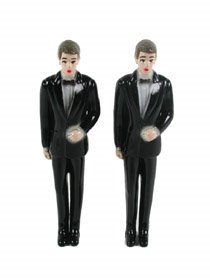
 I don't normally read the "Weddings and Celebrations" section of the Sunday New York Times because, well, I don't like to read about happy people and when those happy people are also fabulously wealthy or quite successful... Well, let's just say that Fosco needs some extra happy pills to make it through the rest of the day.
But, despite the usual envy, I also was moved by today's article about the anniversary of Adam Berger and Stephen Frank.
One of the reasons for my emotion is that I was slightly acquainted with Steve Frank in college (although he knew my roommate much better). And, strangely enough, the fact that he came out after college never made it back to my ears in the last ten years (maybe because he wasn't actually in my class--he was a year or two ahead). As I recall, he was actually a bit conservative (although maybe only economically).
The years since college have been an especially interesting time for me, as I have watched classmate after classmate (including myself) come out as gay. In college, I lived with five other guys and all of us were supposedly straight. Now, at last count, three of us are out and, even though the remaining ones are married or seriously dating women, I'm not going to rule out another surprise (Dr. H****?)
I can't speak for Steve Frank (after all, things seem to have turned out well for him) or for my college roommates, but I still, after ten years, am envious of my peers who were out in college. I think one of the reasons for this envy is that (at least for me) high school and college were the periods of my life in which I had the closest relationships to other men. The college and high school friendships I had with men were really intense and very powerful. But, because I was closeted (and so were so many of my friends), we never got the chance to explore whether that intense friendship could admit/recognize an erotic element. I rarely develop friendships that intense anymore (after all, people in their late 20s/early 30s are busy and tend to be more isolated), and I doubt that any romantic relationship that I have in the future will develop out of a pre-existing friendship.
I think I could have had amazing romantic relationships with several of my male friends from the past, but (at this point) it's maybe kinda too late (although, to some extent, this blog is an extended love letter to one or two of them). The timing for Adam and Steve (*giggle*)seems to have been perfect and that makes me both happy and envious. Mazel tov to them!
Sunday, September 17, 2006
Vows


Denouement: 9/11-9/17
Last week, while you were feeling betrayed by lonelygirl15, Fosco was
- seeking refuge in art.
- ogling Matthew Barney's penis; Bjork's not so much.
- eating lots of very small things.
- attempting Matthew Barney-related humor. Gee, that will play to the masses.
- wondering how to salvage the three cartons of contaminated spinach in his fridge.
- recounting his field trip to San and Francisco.
- learning absolutely everything about Paraguay. EVERYTHING, I say.
- pretending to be Paul Goldberger and then pretending to be Peter Schjeldahl.
Saturday, September 16, 2006
If you see one Matthew Barney film this year...
[Finally, after a week and multiple promises, Fosco delivers his review of Matthew Barney's Drawing Restraint at the SFMOMA.] I've seen more Matthew Barney than most people. We go back a long way. I saw the original exhibit of Cremaster 2 at the SFMOMA in 2000. I spent an entire afternoon at the Guggenheim New York in 2003 to see the Cremaster Cycle exhibit. That fall, I spent over seven hours in a theater (in Grand Rapids, MI), watching the complete Cremaster Cycle. I hope this solidly establishes my Matthew Barney credentials...
In all of my Matthew Barney contemplation, I have reached several conclusions:
- Only his films themselves are worthy of appreciation as art. Each film is generally accompanied by a physical exhibitions of sculpture, drawings, photographs and artifacts that relate to the film. This exhibition is never worthy of the film itself. Without the film, the sculptures are almost completely unevocative. His drawings tend to be either banal or incomprehensible. Sometimes the vitrines he designs for the display of drawings are pretty nifty, but come on--he just shouldn't be allowed to work in any medium besides film.
- Never has a Matthew Barney interview increased my understanding or enjoyment of one of his films. He is not to be listened to. Let the films speak for themselves.
- He needs an editor. Isn't it interesting how great writers are often improved by good editing? Do you ever read recent novels by famous writers and bemoan the fact that they are now too famous to admit editing? Art doesn't always spring forth from the mind of the artist in its most powerful form--sometimes the editor is necessary. Consequently, there are a few hours of Barney's Cremaster series that could be excised with no consequent diminishment of artistic merit.
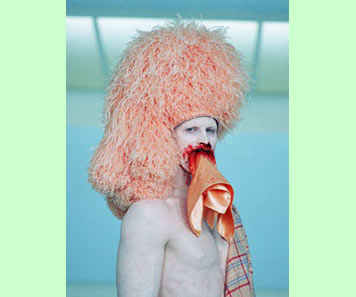 That being said, I need also to note one more thing: despite all of his faults, I love him. The Cremaster Cycle was one of the most transcendent art experiences of my life and I will continue to contemplate it for decades. Some future Halloween, I even plan to attend a costume party dressed as the "Entered Apprentice" from Cremaster 3 (picture at left). So, consequently, I approached the Drawing Restraint exhibit at SFMOMA with a great deal of anticipation.
The physical exhibit itself can be dispensed with by repeating one of my conclusions from above: "only the films themselves are worthy of appreciation as art." Now let's talk about the film.
 The most interesting new element in Matthew Barney's recent artistic milieu is the presence of his ladyfriend Bjork. As much as I hate to disagree with the dreamy Alex Ross (aka, Mr. "I'm hanging out at Carnaval in Brazil with Bjork and Matthew Barney, so SUCK IT, Anthony Tommasini!"), I'm not really a big fan of Bjork's music. In fact, apart from a song here or there (like "Bachelorette," which is an exceptional song), I think her best work was on Selmasongs, the soundtrack to Dancer in the Dark. In fact, as much as I love her whole "adorable Icelandic pixie" thing, I was beginning to think her a bit overrated. Her presence in the movie, therefore, worried me a bit.
 I should not have feared. The film was phenomenal. Somehow, working together has allowed Barney and Bjork to do the best work of their careers. I've now seen it three times. Before we go further, go watch the trailer again.
Before we go too much further, it's time for a plot summary (such as it is...):
- the film opens with an exquisitely beautiful scene of a Japanese woman wrapping two halves of a krill fossil as gifts.
- we see sweeping helicopter shots of a Japanese port city and watch a crew of jumpsuited workers build a gleaming white dock on the water.
- a decorated tanker truck is pulled through a refinery, preceded by a parade of dancing Japanese dancers and children.
- the camera descends one of the smokestacks at the refinery, looking upward; we splash into a bath of golden petroleum and watch strands of bubbles flow toward the surface; a dark, whale-like shape passes over us and the titles, in bronze flensing-knife font, spread across the screen. This is probably the most beautiful shot in the film and it left me completely breathless. You can get a sense of it from the trailer.
- the tanker arrives at the whaling ship, the Nisshin Maru, on whose deck a large steel cast of Barney's "field symbol" (it's that lozenge-with-a-bar-through-it that you see all over his work) has been created. The field symbol is filled with liquid petroleum jelly. This is the third shot in the trailer.
- pearl divers put on makeup, prepare their equipment, and go diving. They come across a large floating chunk of ambergris.
- strung with colored paper, the Nisshin Maru pulls away from the dock and heads out to sea.
- the chef of the Nisshin Maru (in a very witty scene), cooks dinners of whale blubber (shaped like the "field symbol") with pomegranite seeds and prawns.
- Bjork, cute as a button in a red winter wrap and hiking boots, waits on the shore for a boat to pick her up. One does.

- Matthew Barney (as the other "Occidental Guest") waits on a pier for his motorboat, which arrives.
- Bjork arrives at the Nisshin Maru and is lifted on board in a basket; she is undressed and takes a bath. You see her naked from behind through a scrim--you just get a hint of public hair. Also, you see her remarkably pointy breasts underwater.
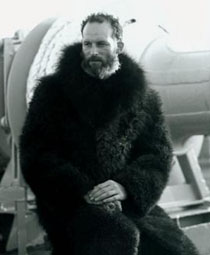
- MB arrives on board the boat, removes his furry, furry overcoat and has his beard shaved off.
- MB lays down to sleep on a tatami mat.
- during the night, the crew plays a mock game of whale-harpooning on the deck.
- as MB sleeps, a drunk crew-member slips into his quarters and shaves off MB's eyebrows and shaves a large bald swath on the top of his head from his forehead to his crown.
- the next morning, there is much unsuccessful whale hunting, but the ship does find and take onboard the large floating chunk of ambergris.
- Bjork has her hair done (with many sea anemones!) and is dressed in animal skins; MB awakes and is also dressed in strange clothing. MB does full frontal nudity in this scene (uncircumcised, it appears), but Bjork does not.

- Once they have been attired, they (eventually) enter the tea ceremony room. The tea master appears and MB speaks the first spoken line in the film (over an hour in at this point): "Please come in." A long ritualized tea ceremony follows, in which Bjork says her one line (in Icelandic): "Thank you for inviting me." After the tea, MB asks the tea master (in an extremely stilted manner): "Can you tell us something about the vessel?" This leads to a long monologue by the tea master about the history of the Nisshin Maru, about the special effects of the ambergris onboard, and about the psychological scars left by the Nisshin Maru's collision with a Greenpeace boat near Antarctica. Once this monologue is over, there are no remaining spoken words in the film (at least another hour at this point).
- as the tea ceremony goes on, the workers on the deck above have stowed the ambergris log in the hull and have cut the bar from the middle of the now-solid petroleum jelly field symbol. The bar is hoisted to a different part of the deck and is cut into blocks using flensing knives. The blocks of jelly are fed into the ships boiler and are melted.
- Night falls. Bjork and MB remain in the tea room alone. They begin to make out, animalistically. There is licking of faces and noses. It's hot. MB gets one of the anemone spines from her hair stuck into his forehead. She pulls it out. It's very hot. A storm blows up. The ship is now strangely deserted (except for the couple). The boiler begins to overflow with petroleum jelly and the jelly slowly begins to fill the tea room.
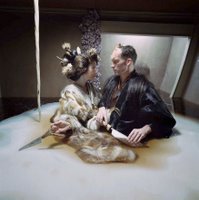
- This is where things get a little weird. A flensing knife floats into the room and MB picks it up and begins to cut Bjork's legs with it. Bjork picks up her dagger and cuts his legs in return. There is some blood, but not as much as there should be. The couple continues their cutting as the petroleum level rises. Eventually, they manage to cut off each other's feet. Then they keep cutting. They break for a moment to feed each other a delectable morsel from their own thighs--sashimi-style. "Mmmm... Delicious Bjork." This is upsetting, but their faces remain placid as they float in a "cloud" of hardening petroleum jelly. Eventually, they slice each other's legs off entirely. Somehow, their lower torsos transform into whale-like tails and blowholes appear in the backs of their necks. They dive into the oil.
- While MB and Bjork complete their transformation, the workers on the deck remove the sides of the field symbol mold and the unstable petroleum jelly begins to collapse on the deck.
- The Nisshin Maru is now surrounded by icebergs. We see two whales surface near the ship, blow, and dive again heading away from the ship. Is this MB and Bjork? Your guess is as good as mine.

- The "petrolatum" spirit, hiding belowdecks, begins to refill a mold with petroleum jelly.
- A pearl diver surfaces and spews pearls from her mouth. The pearls sink to the ocean floor and form two interlocking circles.
- A small concrete deck is pulled from the sea by a chain onto the dock next to the gleaming white one built early in the film. The concrete dock collapses under the weight of the model.
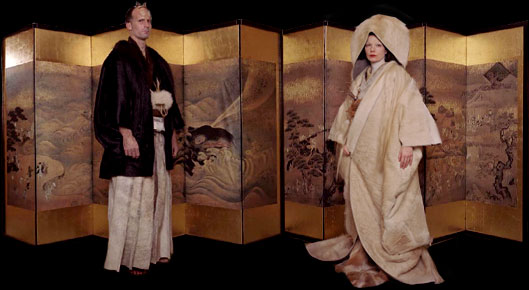
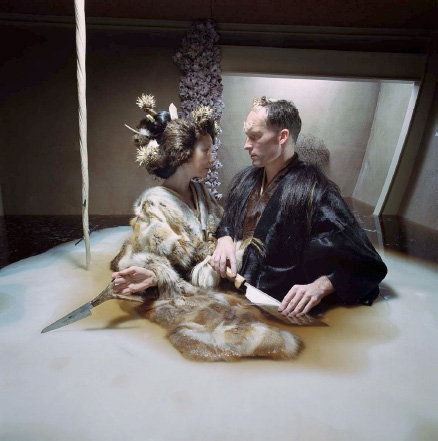
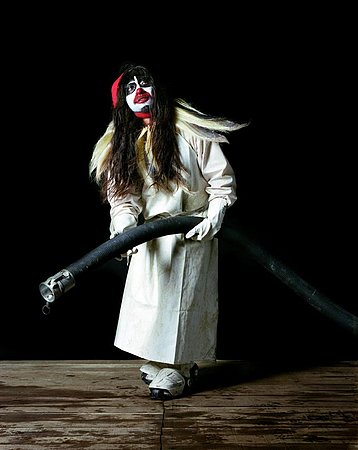
What could all this mean?
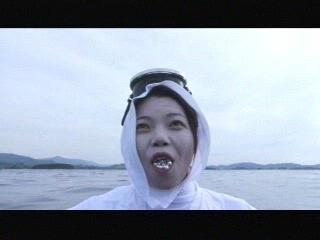 Well, as you can tell, Barney's work is really more interesting for its images than for its stories. And you can tell which images made a serious impression on me. You can get a sense of many of these images from the trailer, luckily. As for the narrative, well, I wouldn't worry too much about it. Just consider it an opportunity to think for a while about ritual, social constraint, oil, and biological plasticity.
 Why is this film so good (apart from the fact that it is so absolutely gorgeous)?
- Matthew Barney, finally, has learned to edit--at least to some extent. Granted, 145 minutes is not svelte, but five years ago this film would have been six hours long. In almost no scene does Barney let the action occur in real time. This is a significant improvement over several of the Cremaster films (especially 1, 4, and 5).
- Bjork's music is wonderful. She singlehandedly moves several slower scenes along with her music. Although Jonathan Bepler's music for several of the Cremaster films was interesting, it was never meant to be an equal partner to the visual images. I'm beginning to think that Bjork does her best work when she is contrained by having to write music for a film.
- It is such a thick text. You can spin so many interpretive webs from these dark materials. It's so allusive that many areas of knowledge are in play: Japanese culture, physics and chemistry, marine biology, whaling history and practice, and, of course, Barney's previous artistic work in both the Cremaster and Drawing Restraint series.
- It's totally sexy (and discomfiting at the same time). As Fosco has said recently: "I like things that make me horny and uncomfortable at the same time."
Tainted Spinach: An Unanswered Question
 As Fosco has three packages of "Natural Selection Foods" fresh baby spinach languishing in his fridge, he has a personal interest in the ongoing tainted spinach debacle. According to the Times (and numerous other media outlets),
'Simply washing it is not enough to protect you,' Mr. Doyle said in a news conference in Milwaukee.That's great, but what if you wash it in bleach?
Friday, September 15, 2006
SFMOMA, Part 2: "Hey, there's art in here!"
Now that we've tasted the crust of the pie that is the SFMOMA (in Part 1), we can fork the creamy, creamy filling inside.  Fosco loves contemporary art--loves it! So naturally, he enjoys lurking (with notebook) in the galleries at the SFMOMA, winking at sexy strangers, and hastening together to the bathroom for a quickie... Oh wait, or maybe that was an episode of Queer As Folk. But, anyway, Fosco still loves the art. Here are the highlights from several of the exhibits that he saw during his three(!) recent trips to the SFMOMA.
The exhibition "Between Art and Life" is designed to show off the permanent collection of the museum, including some gorgeous new acquisitions. It's small, but packed with flava. Some highlights:
- Gerhard Richter's "Lesende (Reading)" 1994. Richter's slightly blurry photorealist paintings are so beautiful, and this is one of the best. That shockingly attractive woman is his wife, the stud. This painting makes regular appearances on Fosco's laptop as the deskpicture. It is worth visiting Richter's website to see more.

- Fosco was not familiar with the work of Marilyn Minter but he should have been. Minter's art is feminist, sure, but it's also voluptuous and enticing. The SFMOMA is showing "Strut" (2004-05), a painting on enamel of a dirty and sweaty heel in rhinestone-encrusted Dior stilettos. The message is obvious, but it's sooo pretty to look at. See it here. As I was researching Minter, I found another of her works that I adore. It's called "Treasure Trail" (2003) and you can see it below:
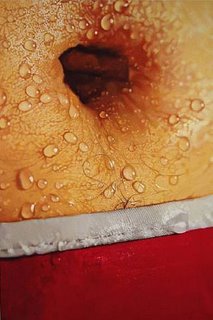 I think this is a remarkably sexy painting, and that response is destabilized (at the same time that it occurs) by questions of the sex of the owner of the navel as well as by questions about objectification and voyeurism. Fosco likes a painting that makes him horny and uncomfortable at the same time.
 - Jenny Holzer has been one of Fosco's favorite artists for years. In fact, he even has one of her "truisms" tattooed on his shoulderblade. (Which one? Discover for yourself and receive a complimentary t-shirt.) On display at SFMOMA was Holzer's "I AM A MAN" (1987), a ten foot tall vertical LED board with red and green messages (in all CAPS and with no punctuation) scrolling rapidly upward. Fosco managed to read
- WHY I FIGHT IS NOT YOUR BUSINESS
- THERE IS PLEASURE IN STOPPING MY FLESH WHEN IT DOES WRONG
- I NEED PERFECTION BUT WHEN I IMPLEMENT IT HALF OF EVERYONE DIES
- WHY I FIGHT IS NOT YOUR BUSINESS
- The last highlight I will mention in this exhibit was a painting by Julie Mehretu, Fosco's homegirl from Michigan (reprazent!). Mehretu has (justifiably) become an art star in the last few years (since Fosco saw her coming-out party at the 2004 Whitney Biennial), even receiving a 2005 MacArthur Foundation Grant (Fosco thinks they're nicknamed "genial grants" because the recipients are typically quite friendly). At any rate, Mehretu's compositions are usually quite stunning. They are composed in ink and acrylic paint, but they fool the eye into perceiving several layers of depth, typically including: grids (or askew grids) in ink, lines of movement/force, and brightly-colored almost-recognizable shapes and symbols. The effect is kinetic, but in an energizing (not tiring) way. The SFMOMA recently acquired "Stadia I" (2004), but, unfortunately, I wasn't able to find an image on the web. You can get the idea, at least, from "Stadia III," a painting from the same series:
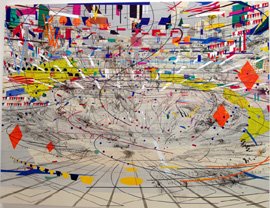 "Stadia I" is a little bit less easily identifiable as a stadium (the flags aren't quite as obvious), but it is essentially similar.


Some representative highlights from several of the other exhibitions (this is turning into a long post and splitting them up doesn't seem worthwhile):
- Charles Sheeler's "Aerial Gyrations" (1953) was really fascinating to me. I wrote a long paper on Sheeler in college and thought I had his "precisionist" style pegged (check out some representative work here), but then this little painting shows up as a nifty surprise. The reproduction here isn't great, so you can't tell that those are pastel colors (not usually associated with Sheeler). And it's so cubist! This isn't the "precisionist" Sheeler. Consequently, this is a really interesting painting and were Fosco an art historian, he would want to spend some time thinking about it. But, as he is only a blogger, he is moving on.

- Creepy architecture from the FUTURE! That's what is designed by Xefirotarch. They do some kind of thing with biological processes that produces shapes that don't exactly occur regularly in geometry. It all looks pretty complicated and math-based to me. Also, as far as I can tell, nothing they have designed has been built. I'm sure that "theoretical architecture" is important and all, but I especially like it when architects build things.
- How can anyone not love Wayne Thiebaud? I love his "Display Cakes" (1963) so much. Thiebaud is brilliant at making food seem otherwordly, comforting yet strange. What planet did these cakes arrive from? And why do they still look so delicious?
 Fosco once spent an incredibly romantic date strolling through the Thiebaud retrospective at the Phillips Collection in DC with a charming young man named Henry. Unfortunately, the object of Fosco's affection later turned out to prefer to date less interesting and less entertaining people... De gustibus non est disputandum. But that date was still bliss, and Fosco has transferred a portion of that affection to Wayne Thiebaud.
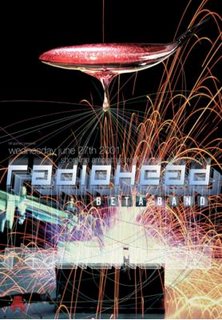
 - Graphic designer Rex Ray creates posters for concerts and, as a small exhibit in the SFMOMA's Design Collection suggests, they are beautiful. I love this poster for a Radiohead show:

Aren't you impressed that I made it this far and didn't once mention the most famous work in SFMOMA's contemporary collection? Enjoy...
SFMOMA, Part 1: Building Trouble
 The SFMOMA (picture at right) has resided at its current location south of Market St. for over ten years now. I visited for the first time a year after it opened and, caught up in the local excitement, was impressed by the building, designed by Swiss architect Mario Botta.
Now that the shine has worn off, I have to suggest that the Botta building hasn't really aged that well. Part of the problem, I think is that really tall and shiny buildings have sprung up around it--it makes the SFMOMA look, well, squat. On the inside, the space is still quite lovely and light-filled. However, on the outside, the horizontal stripes don't exactly soar. It's clearly not the architectual icon that San Francisco definitely needs. Of course, I'm not the only person who thinks so.
Speaking of architectural icons in San Francisco, what are the possibilities for the immediate future?
- the new deYoung Museum, designed by Herzog and de Meuron. Despite the exceptional reviews (read Paul Goldberger's New Yorker review--about halfway down in the column), a sustained low-speed driveby by Fosco on Thursday made it look unimpressive. I wanted to like it, but it just didn't do anything for me. I'll give it another chance, sure (and go inside as well), but I'm not optimistic.

- the (recently-deceased?) Prada building designed by Rem Koolhaas. Critics desctibed it as a "giant cheese grater" and it looks like the project is dead. Alas--this is one building I would have liked to see.
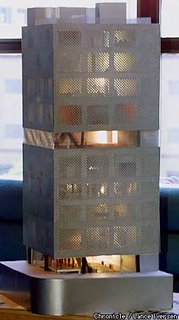
- the Contemporary Jewish Museum, designed by Daniel Libeskind. Visit the website and view the images here.
- I'm really curious to see this one: the "Federal Complex" and Seventh and Mission. The problem, of course, is that no city wants its most iconic building to be a government office building.


The News from Paraguay: "Continued mortgaging the country" is a problem.
We are approaching the season of some of the serious literary awards and Fosco has a confession to make: he likes the big literary prizes. There is no easier way to snag his interest in a book than to mention that it won the Pulitzer, the National Book Award, or the Booker Prize. Er... I mean the Man Booker Prize. Even some of those oddly-named PEN awards can be worthy of notice.
Fosco is also immediately interested in any book that receives more than "three paws up" from Piper. Be warned: fewer than three paws up is just a waste of your time.
The reason that Fosco enjoys these awards is that he doesn't take them too seriously. It seems silly to believe that the National Book Award could really mean that the winning book was the best book of that year. What would that even mean? Rather, Fosco takes these awards as saying something like this: "We, a committee of well-educated, well-read people who pay attention to the world of letters, would like to suggest that the following book or books is probably worth your time." If you think about the awards in this way, it frees up a lot of potential anger and resentment that can then be applied elsewhere (ideally, towards the elderly).
Speaking of anger and resentment, remember all that nastiness over the 2004 National Book Award? That was the year that love-him-or-hate-him author Rick Moody was the chair of the panel and the nominees were 5 women who
- all lived in NYC
- had sold less than 2500 copies each
- no one had ever heard of (and by no one, I mean: anyone who subsequently wrote a resentful criticism of Moody's choices).
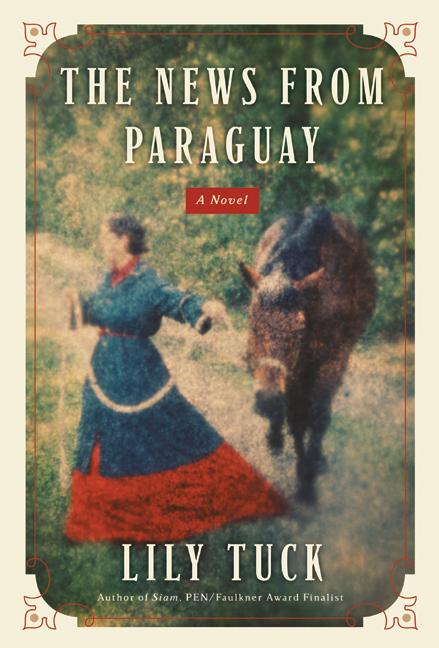 In the end, I felt bad for eventual winner Lily Tuck and her novel, The News from Paraguay. After all, I imagine that she felt like she hit the lottery even to be nominated over heavy hitters like Philip Roth (considered by Fosco to be our greatest living writer). And then, to actually win the award, only to have her book remembered as "that undeserving book that Rick Moody promoted because of his own weird literary agenda." The whole thing has the flavor of a "your wish has been granted, but with an unpleasantly ironic loophole--ha ha!" and that makes me feel a bit sorry for Lily Tuck.
 But, even though I felt sorry for her, I had no intention of reading the book. After all, it's about Paraguay--an afterthought of a country on an afterthought of a continent. And even worse: it's about Paraguay in the 19th Century! I would have bet a large amount of money that Paraguay didn't even exist in the 19th Century (and I would have lost...) Maybe this makes me a First-World Chauvinist (although, I have read historial novels about India, China, and Africa--so maybe my chauvinism is limited to South America).
But then, several months ago, I came across a sad sight: an entire stack of hardcover copies of The News from Paraguay (first printing!) on remainder at a bargain bookstore. No National Book Award winner should suffer this fate, no matter its shortcomings (isn't there something the National Book Foundation can do to prevent this?). I was moved to purchase a copy, just to make the pain go away. And then, last week, mainly because it was there (and it did win a National Book Award), I picked it up and read it.
And you know what? It's actually really good. Luckily, the novel doesn't require you to learn much about historical Paraguay or even to care much about Paraguay (which is good, because I wasn't going to do either). Rather, by recounting brief vignettes (kaleidoscopically, I think the reviews said) with a gently irony (reminiscent of my beloved Penelope Fitzgerald), Tuck illuminates everyday emotional life, with its mixture of venal absurdity and pitiful sincerity. It's sweet and sad and occasionally sexy and I was moved by it. Was this the best novel of 2004? I don't care--I'm just glad that I finally got around to reading it.
And as for the news from Paraguay, according to a Babel Fish translation of one of the stories in today's Ultimo Hora:
"IT IS NOT POSSIBLE TO BE CONTINUED MORTGAGING the COUNTRY", INDICATES the PRESIDENT Of the CONGRESS We rejected the orders of the Executive authority because the guarantee sufficient does not exist to administer that money, the holder of the National Congress declared. The oviedista senator Enrique González Quintana made these declarations during a meeting of leaders of large stone benches of the Senate, occasion in which the reasons were explained that motivated the decisions taken yesterday in the Legislative Power.
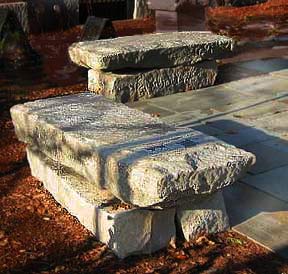 All I know is that I would lurve to see all those "leaders of large stone benches." Do you think they're animate? Even if not, Paraguay still probably has a better democracy than we do.
Thursday, September 14, 2006
Drawing Restraint 9: Eight things NOT overheard on the way out of the theater...
 It's 9 pm, and Fosco just returned from another day trip to San Francisco to see yet again Matthew Barney's film Drawing Restraint at the SFMOMA. (It turns out that the film is just like Miss E...so addictive!)
Fosco is exhausted (and stuffed with Nanking scallops). He is (finally) ready to write his full review of the film and exhibit--look for it tomorrow. Until then, do two things:
1. Watch the trailer.
2. Enjoy the following bit of silliness.
(N.B., if you don't know much about the film, some of these will be funnier after you read Fosco's full review tomorrow).
- "My favorite part was the dialogue."
- "I wish it had been longer."
- "Now I'm hungry for sushi!"
- "I don't understand what he sees in Bjork..."
- "I hear there were script problems from day one."
- "I still don't understand why Gene Shalit hated it."
- "What do you think Bjork will wear to the Oscars this time?
- "Who did the music?"
FOSCO.
Wednesday, September 13, 2006
Bocadillos: Alas, "tapas" is not Spanish for "topless."
[The most recent of Fosco's weekly restaurant reviews.] This week, Fosco ventures even further afield from Santa Cruz in order to consider Basque tapas in San Francisco.
The regular reader may recall Fosco's earlier foray into Basque cuisine in Elko, Nevada. Fosco recalls fondly that hearty meal, but would expect few similarities between that food and the tapas at Bocadillos. After all, to Fosco, "tapas" might as well be translated as "too small to be filling" (which is the reason he typically avoids tapas restaurants). However, he did have one good reason to give Bocadillos a chance: "chef hot" (according to the Gawker Professional Hotness Scale) Rachael Ray.
Now Fosco doesn't quite understand why there is so much hatred of Rachel Ray. As television chef/personalities go, she seems to be one of the most likeable and inoffensive. She doesn't pretend to be a culinary genius (a la Bobby Flay, who should probably be flayed alive. HA!). She doesn't have an infernal catchphrase. She doesn't use a fake Chinese accent. At worst, sometimes her taste is a little middlebrow, but... so what? She's not trying to fool anyone. And how can you fault her for being enthusiastic about food? Isn't that, um, part of her job?
But anyway. I happened to catch Ray's recommendations for San Francisco and thought that Bocadillos looked enjoyable. Additional research confirmed its reputation and so, yesterday evening (after another afternoon at the SFMOMA-that place is addictive), I dropped in for an early dinner.
Because tapas must be accompanied by a drink, Bocadillos has a long, strange list of signature cocktails (in addition to many, many types of wine). I ordered the appropriately-named Euskadi cocktail: a blend of nigori-sake, cranberry juice, and lime juice. The presence of sake in a Basque-themed cocktail is somewhat inexplicable to me and, alas, I do not recommend it.
I'm afraid that this question may cause Fosco some difficulties in the "cultural sensitivity" department, but why are Basque cocktails so bad? The picon punch that I had in Nevada was also really unappetizing. Think I'm exaggerating? Here are two of the other cocktails offered at Bocadillos:
- half sprite, half lager.
- half Coke, half red wine.
Luckily, the food at Bocadillos is better than the cocktails. The menu is long and there are so many appealing choices that settling on a few is difficult--truly, it would be best to bring several friends and share. However, as Fosco was alone yesterday (his personal assistant Geoffrey was still in Seattle, presenting his entry in the HUMP Amateur Porn Festival). Fosco (heroically) ate
- a "bocadillo" (small sandwich) of house-made catalan sausage and manchego
- marinated Moroccan beets: Fosco loves beets, especially as the marinade contained cardamom. Yum!
- patatas bravas: twice cooked steak fries, tossed in red pepper and served with a delicious romesco sauce
The food at Bocadillos is good (if you avoid the cocktails), but, on the whole, I don't plan to return. The problem is the service, which was pretty obnoxious, actually. I was made to feel as if I were not quite hip enough to be there (especially strange as I was one of only two patrons there at the early hour--it's not like I was filling a chair that would otherwise have been occupied by Lindsay Lohan's vagina. Would they rather my chair be completely empty? Odd.)
Is it possible that Fosco just isn't cool enough to live in San Francisco? Hmmm.
Monday, September 11, 2006
Field Trip Week: San Francisco Treat, Part 2
[Read Part 1 here.] After the spending spree at City Lights, Fosco and his personal assistant Geoffrey window-shopped their way through the Market St shopping area (why does the H&M at 150 Post St only have women's apparel? Women's clothes don't fit Fosco.)
Looking up, we were discomfited to see the spooky wraiths crowning the mansard roof of 580 California St. (see pic at right). Later research reveals that:
- the building was designed by Philip Johnson.
- the statues are "corporate goddesses" and were designed by Muriel Castanis.
- they are twelve feet high and HAVE NO FACES (note the hint of rising panic in Fosco's voice).
Fosco has but one request for the 580 California wraiths: "Please don't kill me."
Fosco and Geoffrey decided that the best place to hide from the wraiths was inside the SFMOMA. Fosco will have a separate entry on this visit (including a full review of the Matthew Barney film and installation in an upcoming post).
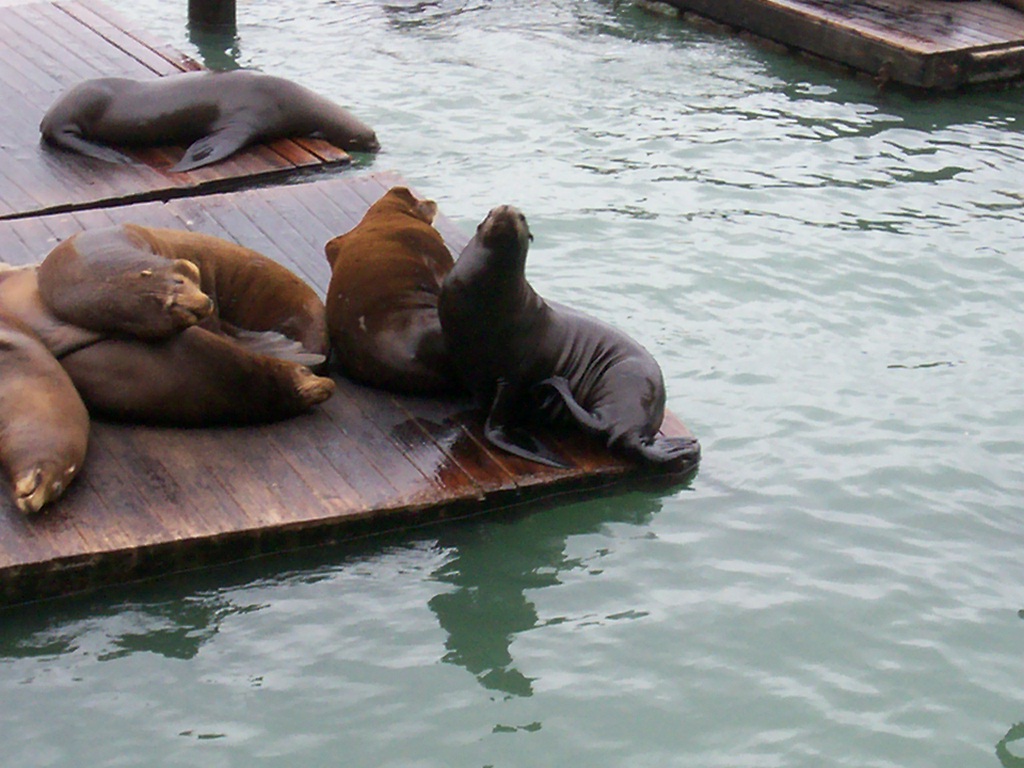 After the museum, we decided to play tourist for a bit, with a visit to the sea lions at Pier 39. Despite the frigid grey weather, the sea lions were out in force and they were spunky.
 I must admit that I'm quite fascinated by sea lions. I like that they sleep in big piles of bodies. I also think it is cute when they scratch themselves with their hindflippers--like they had fingers or something. And did you know that they are evolutionarily related to bears? And who doesn't like bears?
And then something weird happened at Pier 39: I walked right past my freshman-year roommate Chuck Kapelke, who was pushing a stroller. I hadn't seen Chuck in almost ten years, but I recognized him easily (as he did me). We hadn't been in touch, but it turns out that he lives in the Bay Area and has an adorable daughter named Dahlia. He's a freelance writer, and it seems he has co-written a book, which is exciting. Even more exciting, according to the amazon.com text stats, is that his book is written at a much more advanced level than is Rick Moody's Garden State (for example). Awesome work, Chuck!
Watching all those sea lions made me hungry, so it was time to head to Chinatown for dinner at the famous dive, House of Nanking. Yes, there are no frills and no atmosphere (and you can be in-and-out in under 30 minutes), but it is still worth a visit. Surprisingly, the executive chef, Peter Fang, (dressed casually in a rugby shirt) was actually taking the orders himself when we were there. Maybe he needed a break from the kitchen. He was not exactly "friendly"--in fact, he arched an eyebrow at one of the dinner selections we made, for reasons which we don't understand (nor probably ever will).
The food was exceptional:
- Steamed potstickers in a red peanut sauce.
- Nanking scallops were crispy on the outside and smooth on the inside, each one served on a bed of lemon and eggplant.
- Stuffed mushrooms (listed in the vegetable section of the menu, but don't be fooled): filled with ground beef and pan-fried, then covered with a brown sauce. These were addictive--I will order them every time I return.
And no, I didn't say anything to him--I just smiled, nodded and went back to my mushrooms. I would love for him to be gay, though. Sigh.
All-in-all, a full day in San Francisco, no? On the drive back, it became apparent that the South Bay had enjoyed a beautifully sunny day. As we drove, it was quite cool to watch the fog return to slide down the Eastern slopes of the mountains:
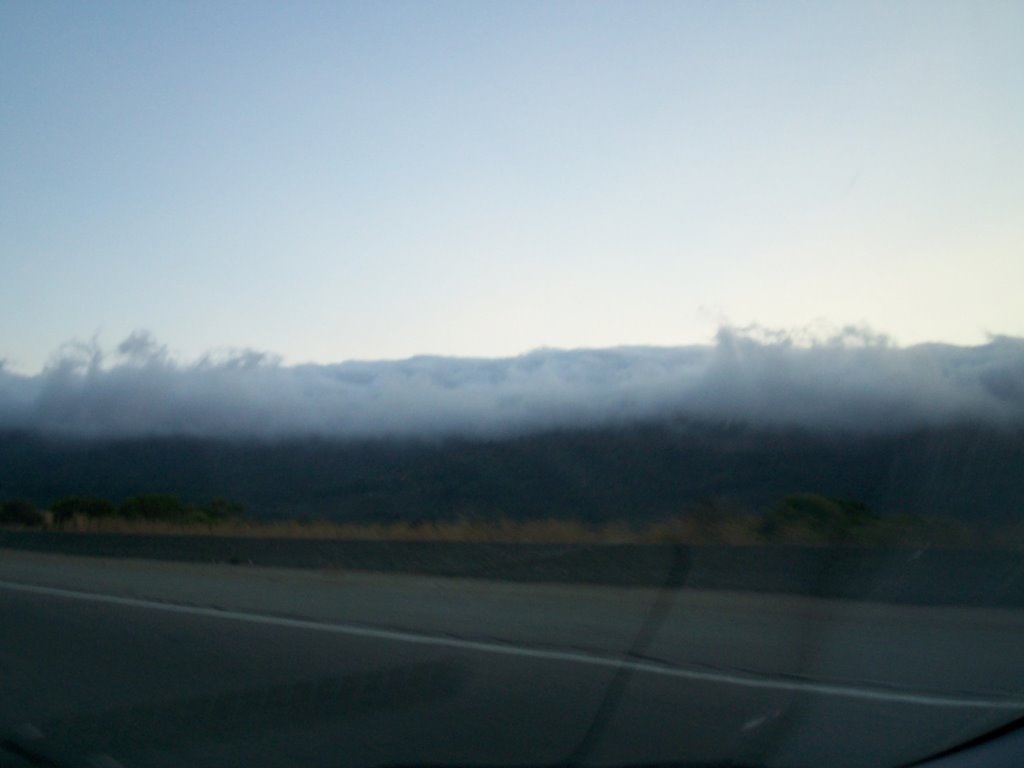
The fog here is certainly like no weather I've encountered before. It's actually a bit like that "nothing" from The Neverending Story. Great, now I'm hearing Limahl in my head. See you in hell, Limahl!
Field Trip Week: San Francisco Treat, Part 1
I was going to title this post "Homotown USA," but then I realized that I've seen more homosexuals on a Saturday afternoon at the East Palo Alto IKEA than my personal assistant Geoffrey and I did in San Francisco on Friday. But, that's mainly the fault of our itinerary: we went nowhere near the Castro, staying mainly in the FiDi, SoMa, and NoBe (wow, that's annoying).
Even without homos, it was still a perfect day in San Francisco. Well, except for the weather, which was cold, windy and drizzly. I thought we were going to be on the sunny side of the city (at least in the afternoon), but the fog never lifted. It was actually pretty miserable. I had planned for cool weather, but hadn't realized that I would need a hat and gloves. Oh well.
The drive from San Francisco from Santa Cruz was even pleasurable, thanks to I-280, sometimes called "the most beautiful freeway in the world." It is a lovely freeway, winding beneath the slopes of the Santa Cruz mountains, avoiding the urban/suburban sprawl just a few miles to the East, and flirting with the San Andreas Fault. However, as a connaisseur of interstates, I would suggest several other stretches that are more scenic:
- I-70 between Denver and Vail: a spectacular ascent into the Rockies.
- I-80 between SLC and Wendover: the Wasatch range, the Great Salt Lake, and the Bonneville Salt Flats.
- I-64/77 between Charleston and Beckley, West Virginia: a high-speed curvefest along a winding creekbed
We started our San Francisco adventure with a retro lunch at swinging supper club Bix. It's located in this hard-to-find alley in an upscale furniture/antiques neighborhood near the Transamerica Pyramid. I felt like I was in a speakeasy, but with much better alcohol (did you know that Prohibition booze was yucky? It's true.) My lunch:
- the Bix Strawberry Rickey (Skyy 90, strawberry puree, sweet & sour, and soda): so fresh and crisp! I could have had three.
- roasted tomato soup with a basil-ricotta crouton: competent and hearty-perfect for fighting the chill weather.
- shallot crusted albacore tuna with butter beans, gypsy peppers, and lemon-smoked paprika sauce: divine! The sauce just made everything melt in your mouth.
- chocolate brioche bread pudding: topped with a fist-size dollop of thick-whipped cream, this was rich, hot, and smooth. Another great course for a cold and dreary day.
After lunch, we made a pilgrimage to the greatest bookstore on the planet: City Lights. I love this place! It was founded by beat poet Lawrence Ferlinghetti! They published Allen Ginsburg's Howl (someday, ask Uncle Fosco to tell you the story of how he played a reading of Howl on the radio and got into serious obscenity toruble...). And how can you not love their new banners? (pic below)
 I kinda bought a bunch of books, including a collection of essays on Howl, selections from Paul Valery, and the book that started it all: Pictures of the Gone World.
I see water and buildings...
Alas, it's been five years since September 11, 2001.
I'm not interested in writing a long post recalling painful memories, mourning the victims, praising heroism, or expressing my anger at what has happened in the US and the world ever since. I suspect that you can correctly guess what I would have to say on each of those topics.
Instead, I would rather take a moment to mention the most moving artistic responses to the events:
- On the Transmigration of Souls by John Adams.
- Extremely Loud and Incredibly Close by Jonathan Safran Foer.
- "Twilight of the Superheroes," the title story in the collection by Deborah Eisenberg.
- and how could I forget: Bruce Springsteen's The Rising
For a moving post on the personal aftermath of 9/11, visit The Gideonse Bible here.
N.B.: the title of this post is taken from the devastating libretto for Adams's "Transmigration."
Sunday, September 10, 2006
Denouement: 9/3-9/10
This week, while you were creating your very own blog about masturbation, Fosco was
- discovering that he likes it "Animal Style."
- studying for a physics exam.
- looking at pictures of Bush.
- taking field trips to Pebble Beach and Redwood Country.
- wondering how to utilize the heat emitted by Latinos.
- writing filthy limericks while enjoying casual sex in Steinbeck country.
- wondering how some people can live with themselves.
- out on the run tonight, but there's no place left to hide.
- shaking his milk.
- imagining the future of the country.
Sex Baiting Alert!
I'm going to step outside of the fun-loving Fosco persona for a post in order to call your attention to this item:
Sex Baiting 'Prank' from waxy.org.
This is EVIL.  Basically, some self-promoting tool decided to post a sexually explicit ad on Craigslist Seattle pretending to be a woman seeking casual sex with men. Then this bacterium did the unthinkable: he posted all of the replies verbatim (including pictures) on the website Encyclopedia Dramatica.
Now granted, some of the people who responded to this ad should have been smarter than to use identifiable email addresses and pictures. However, should the punishment for that lapse really be getting fired? Or a divorce?
The waxy.org post discusses the chances of legal sanctions against the loser who started this (conclusion: slim-to-none). As someone who believes neither in an afterlife nor in karma, I hope there is some way for guy to get what is coming to him in this lifetime.
And for all of you who, like me, enjoy internet hookups, please USE A PSEUDONYMOUS EMAIL ACCOUNT. Don't make it easy for the idiotic and malicious.
Saturday, September 09, 2006
Next Stop: The White House!
 Or, perhaps, the White House II.
Either way...
The Kucinich Express stops in Santa Cruz.
Get on board now, or you're going to feel very silly later.
Ten things that will definitely be on your Calamity Physics midterm.
Last week, I read Marisha Pessl's Special Topics in Calamity Physics. With the adoring reviews this book is getting, the cynic in me would lurve to report that it is bad. But it's not. It's actually the best novel I've read this year (and this is an impressive list, see #5 below).
Here are ten things you to know about the novel (no real spoilers):
1. What is the novel like? Let's imagine the style expressed as an equation:  2. Who doesn't like to be flattered? Not me. I was pretty pleased with myself after 100 pages of the novel, as I caught allusion after allusion to canonical novels, Romantic poetry, and the 1980s. Of course, the novel is still readable if you miss the allusions, but I loved running into them.
3. I loved the invented books that the narrator regularly references, and no fake quotation more than this one:
as Yam Chestley wrote in Dixiecrats (1979), 'The South knows two things through and through: cornbread and Satan' (p. 166).How I wish this book existed.
4. If Pessl wants to be an internet phenomenon, she's well on her way. The "Calamity Physics" website is beautifully designed and really interesting (especially the additional information about the novel, like the rejected first lines). I could have done without the snarky Cliffs Notes, though.
Even more interesting, one can add the main character of the novel (Blue van Meer) as a friend on MySpace.
And, because Pessl's allusions to literature in the novel suggest that she is a good reader, I wouldn't hesitate to take most of her advice on 10 great debut novels. Although I think her Stephen King pick looks a bit like flattering the middlebrow.
5. This book is better than all of the novels I have read in the past year, including several novels that I loved, such as
- Extremely Loud and Incredibly Close
- Lunar Park
- This Book Will Save Your Life
- In Persuasion Nation
- Twilight of the Superheroes
- Indecision
- Jonathan Strange & Mr. Norrell
- Sabbath's Theater
- and, of course, Atlanta Nights
 6. Is Marisha Pessl hot? The jacket photo (right) suggests that she is.
 But wait, not so fast, my friend. There are other pictures, and, it turns out, other standards that may need to be applied. Is Marisha Pessl hot or just "book hot"?
[One quibble with the linked table: Sarah Silverman isn't just "comedy hot"--I think she's legitimately hot.]
7. According to a writer-type friend of mine, one of the hardest things to do in fiction is to provide the reader with information that the first-person narrator does not know him or herself. Pessl does this really well in her novel.
8. A favorite passage (and an intriguing idea for university class-schedulers):
Dad once noted (somewhat morbidly, I thought at the time) that American institutions would be infinitely more successful in facilitating the pursuit of knowledge if they held classes at night, rather than in the daytime, from 8:00 P.M. to 4:00 or 5:00 in the morning. As I ran through the darkness, I understood what he meant. Frank red brick, sunny classrooms, symmetrical quads and courts--it was a setting that mislead [sic] kids to believe that Knowledge, that Life itself, was bright, clear and freshly mowed. Dad said a student would be infinitely better off going out into the world if he/she studied the periodic table of elements, Madame Bovary, the sexual reproduction of a sunflower, for example, with deformed shadows congregating on the classroom walls, silhouettes of fingers and pencils leaking onto the floor, gastric howls from unseen radiators and a teacher's face not flat and faded, not delicately pasteled by a golden late afternoon, but serpentine, gargoyled, Cyclopsed by the inky dark and feeble light from a candle. He/she would understand 'everything and nothing,' Dad said, if there was nothing discernible in the windows but a lamppost mobbed by blaze-crazy moths and darkness, reticent and unfeeling, as darkness always was.
9. The original title of the novel was "Hey Donna Tartt: Suck It!"
10. On a recent hike on a semi-deserted trail near Muir Woods, I found myself creeped out by the woods in a way that I've never been before reading this novel. For me, Pessl has managed to put a spookiness back into the forest.
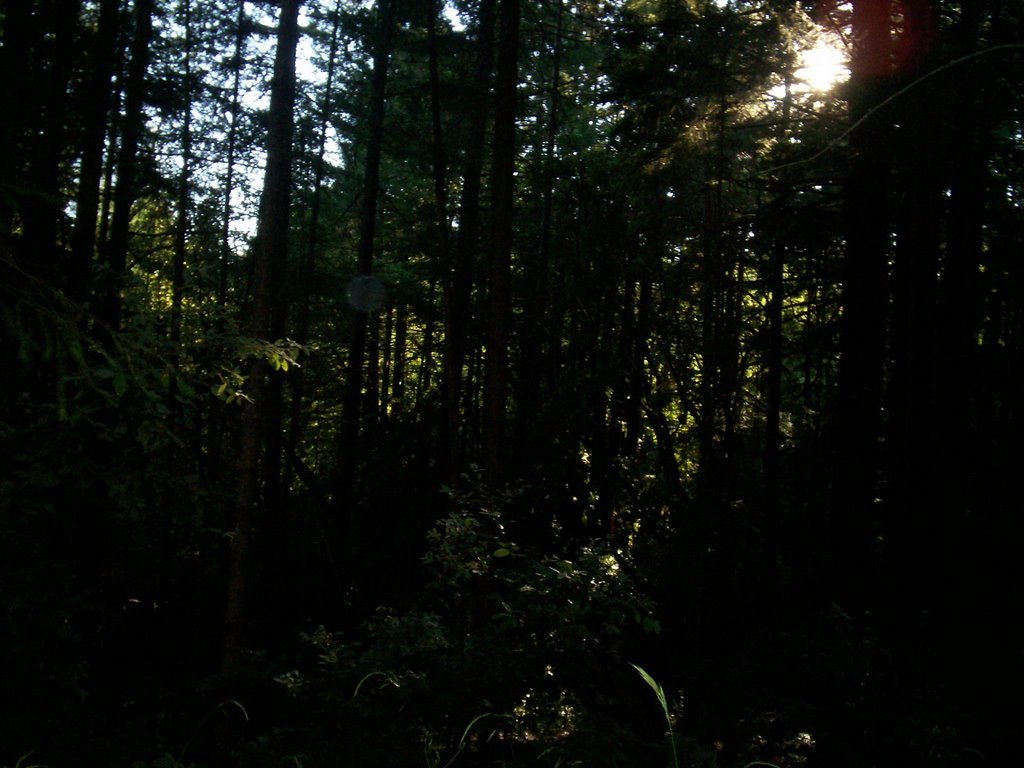
It's not just Ewoks that lurk in the woods.
Field Trip Week: Casual Sex in Salinas, Foucault, Steinbeck, and Dirty Limericks
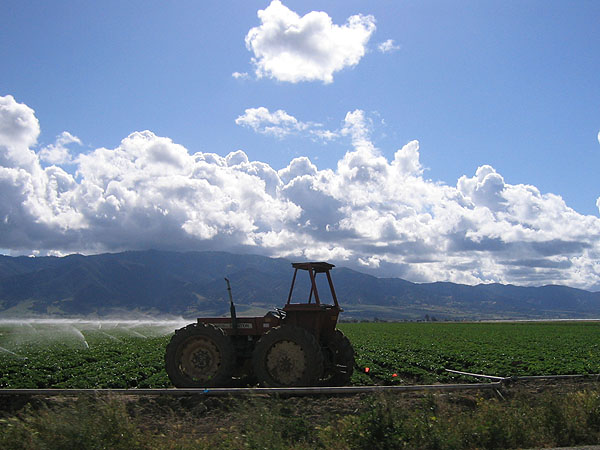 On Thursday night, Fosco gave his personal assistant, Geoffrey, the night off and headed south on Highway 1 into "Big Salad Country"--the Salinas Valley.
I was in Salinas for several reasons:
- to visit the largest city on the Central Coast
- to see the vast fields of lettuce and other greens--trust me, they are indeed vast
- to get a tossed salad
Oh yeah, and I had also recently heard about a "place" in Salinas where visitors can enjoy the company of Latino men--anonymously and for a short while. Naturally, I had to investigate and I was not disappointed--what a great idea! Latino men are so... spicy.
Casual sex between men--I am always reminded of an interview with Michel Foucault, conducted by James O'Higgins, in which Foucault explains why the prohibition on homosexuality has made it so that homosexuals prefer to focus entirely on the sex act itself, as opposed to the rituals of anticipation, courtship, and intimacy:
O'Higgins: I'm reminded of Cassanova's famous expression that 'the best moment in life is when one is climbing the stairs.' One can hardly imagine a homosexual today making such a remark.Or, something more like: the best part is when I get back into my car and go to get a burger.
Foucault: Exactly. Rather, he would say something like: 'the best moment of love is when the lover leaves in the taxi.'
Which brings up another delight in Salinas: an In-N-Out Burger, Fosco's favorite!
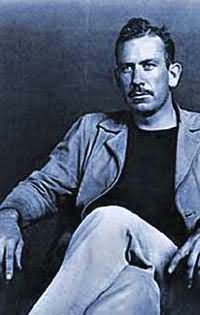 Did you know that John Steinbeck was born in Salinas? I think there should be a sign at the city limits: "Birthplace of that Novelist You Liked When You Were in High School."
 Unfortunately, there is some sort of National Steinbeck Center in Salinas, dedicated to "the exploration of Steinbeck's work and themes." God help us.
I can save everyone a lot of effort by performing an exhaustive exploration of Steinbeck's themes right here:
- Theme 1: People are still worthy of respect and dignity, even if they are stupid and gross and breast-feed grown men and stuff.
- Theme 2: Physical strength and retardation are a problematic combination.
- Theme 3: Sometimes there is a good brother and sometimes there is an evil brother; also, women cause a lot of trouble (see also Book of Genesis).
During my Foucaultian reverie on the drive back to Santa Cruz, it occurred to me that Salinas would be an excellent subject for a dirty limerick. Ergo:
There once was a man from SalinasWhat other California cities can be thus limericked? Modesto? Eureka? Milpitas? Commenters, consider yourself challenged.
Who had an exceptional penis
He bragged: "On a night
When I wear my pants tight,
I score more than Gilbert Arenas."
Field Trip Week: Walking on Endor
 On Wednesday, Fosco and Geoffrey drove north, over the Golden Shower, er, Golden Gate Bridge, through the Rainbow Tunnel into Marin County, up a curvy, curvy mountain road to Muir Woods National Monument.
If I hadn't been walking through the incredible redwoods on the UCSC campus for the last month, I would have been floored by Muir Woods. Even so, Muir Woods is still gorgeous--I could walk through redwoods all day.
But even though the redwoods aren't especially novel to someone who walks in redwoods every day, Muir Woods still has its attractions:
- In the spring, Pacific salmon swim up Redwood Creek to spawn.
- Muir Woods has hosted historic meetings, like the commemoration of FDR held in 1945 by the Charter delegates of the United Nations (held here) and the original summer camping trip of the Bohemian Club, a retreat known affectionately among attendees as "Sodomy Camp."
- Visitors to Muir Woods have the option of walking the trails, or of renting (at a reasonable rate) a speeder bike. Geoffrey and I chose to walk.
 Although this isn't exactly the season for seeing interesting wildlife in Muir Woods, we did come within fifteen feet of some very tame black-tailed deer. However, one question haunted our entire visit:
 Where are the goddamn Ewoks?
The rangers refused to answer this question, so I'm writing a letter to Dirk Kempthorne, Secretary of the Interior and former porn star. I'm glad to see that what he did to pay for college didn't affect his confirmation. Incidentally, he must be the first Secretary of the Interior that people want to dress up as for Halloween.
Wow. This post ended up somewhere weird, didn't it?
Latinos are so... spicy
I know I make tons of fun of Indiana governor Misti Daniels, the Dungeon Master of the Midwest. But Californians fare little better in the resident of the ceremonial Governor's Mansion. Here are some recent words of wisdom (caught on tape) of Governor Schwarzenegger:
I mean Cuban, Puerto-Rican, they are all very hot. They have the, you know, part of the black blood in them and part of the Latino blood in them that together makes it.
I'm no expert on "blood cocktails," but I'm pretty sure this was a stupid thing to say.
Read the full story here.
Who was Schwarzenegger talking about? Check out the zesty Latina spitfire here.
Thursday, September 07, 2006
Field Trip Week: Seventeen Mile Drive
As the start of school nears, Fosco and his personal assistant Geoffrey have decided to wrap up the summer with a week full of fun California-related field trips.
On Tuesday, we headed south on Highway 1 to the world's most beautiful gated community: Pebble Beach. Luckily, hoi polloi are allowed to drive the main loop of the "village," 17-Mile Drive.
Of course, you have to pay $8.75 to do so.
Because this seems to me like a particularly ridiculous arrangement (why should I have to pay $9 to drive along the beach?), I would lurve to say that it's a scam. Unfortunately, it turns out that I would be willing to pay quite a bit more for this privilege. (Although the good liberal in me still wonders why we have to pay at all.)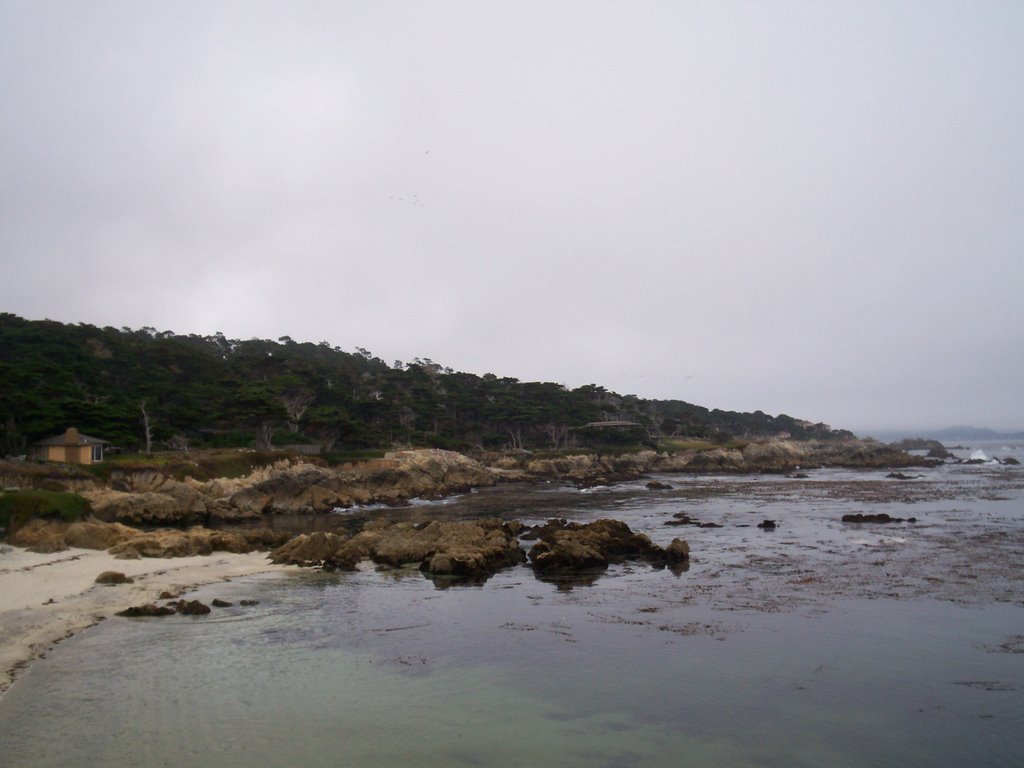 The wildlife viewing was exceptional, despite unpleasant weather (and the late season). We saw
- pelicans
- Brandt's cormorants
- sea otters. So playful!
- a lone seal, lazily napping on a rock (see pic at right and use your imagination).
This icon of fortitude has inspired many and is revered as the eternal symbol of Pebble Beach Company.

Although, I would suggest that the "icon of fortitude" looks a little less inspiring now that it's surrounded by a stone and concrete planter. More like an "icon of landscaping" or something.
Fosco was so enamored of the views here that he's thinking about taking up golf. Oh, and he made an offer on a little beach house. He has a good feeling about this one... Keep your fingers crossed.
Wednesday, September 06, 2006
In-N-Out Burger: The first rule of the secret menu is, you do not talk about the secret menu.
[The most recent of Fosco's weekly restaurant reviews.] It turns out there is this whole California fast-food phenomenon known as In-N-Out Burger. In my East Coast life, I had heard of the place, of course. I knew a couple of Stanford grads who had relocated east and who swore that it was what they missed the most about the West Coast. And, as my friend Todd has pointed out for years, the name does have a somewhat dirty sound to it. So naturally, when I passed one on the interstate two weeks ago, I thought it might be worth a try.
The first time I ate there, I was (truth-be-told) disappointed. The menu is extremely limited--only burgers, fries, and shakes/soft drinks. I definitely enjoy a burger, but I also enjoy a variety of potential toppings. The burger I had was fine. Good, even. But nothing that I would go out of my way to eat. The fries were, well, pretty dull. Definitely not McDonald's caliber. I began to write a post in my head: a skeptical Easterner debunks the In-N-Out myth. But then I decided to give them another chance.
On my second visit, the food was exactly the same: adequate yet uninspired. But (and I remember this vividly, with the clarity which life-changing moments sometimes demand), the guy who got his food in front of me had something different, something that was clearly not on the posted menu! It looked like fries, but they were cheesy! And there was some sort of sauce involved! I ate my boring meal and rushed home to do more research.
[This is the point in the narrative where you wonder why I didn't just ask the guy what he ordered. Or, perhaps, why I didn't ask one of the counter associates. These are valid questions. The answer is that I'm not like that.]
Apparently, the reason that the guy had something delicious-looking is that there is a SECRET MENU at In-N-Out Burger. (This isn't quite the same as Fight Club, so maybe I can talk about the secret menu.) The company tries to pretend that the menu isn't all-that-secret by posting it on their website (although you do have to be sharp-eyed to catch it). However, it turns out that the Secret Menu is actually quite a bit more extensive than they would have you believe.
Ever since discovering this secret menu, I have been enjoying my double cheeseburger "Animal Style," that is with
- mustard-cooked beef patties (What is mustard-cooked? I have no idea.)
- extra spread (very similar to Thousand Island)
- pickles
- grilled onions
Even better, I now order my fries "Animal Style" as well, which means they are smothered with
- melted cheese
- grilled onions
- spread
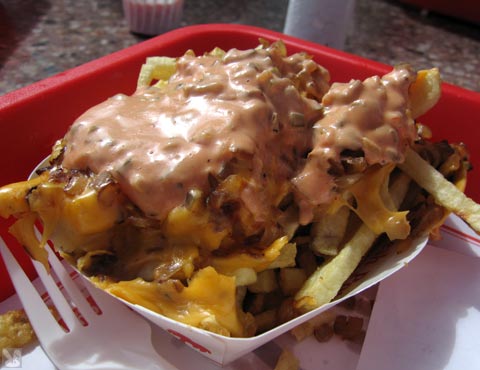
I am pretty sure this is what the Greeks meant by ambrosia.
The only thing that prevents me from eating every meal at In-N-Out Burger (well, besides a strong desire never to visit a cardiologist) is that the nearest one is over 30 miles from my apartment. (Although it is on the way to IKEA...)
My infatuation with In-N-Out is even more remarkable considering that the company is owned by religious nuts. However, do be assured that, as I gobble down my "Animal Style" fries, I am constantly thinking "Hail, Satan." That should even things out.
The Week in Pictures
Fosco will admit that, when he surfs the web, he likes to grab pictures--odd pictures, funny pictures, strange pictures. They are almost entirely useless, but he keeps them in a little folder on his computer desktop and looks at them occasionally for giggles. He's got one of a marmoset on a garden fence in Palo Alto. He's got one of NY Mets outfielder Lastings Milledge shirtless in a cowboy hat and a blazer. Fun stuff.
But this week... well, it's been a picture bonanza! What with
- Lindsay Lohan getting groped by her man candy
- Tom and Katie's pompadoured collection of babies
- and most fascinating of all, the potentially fake (but not very hard to suspend disbelief, regardless) picture of Lindsay Lohan's junk
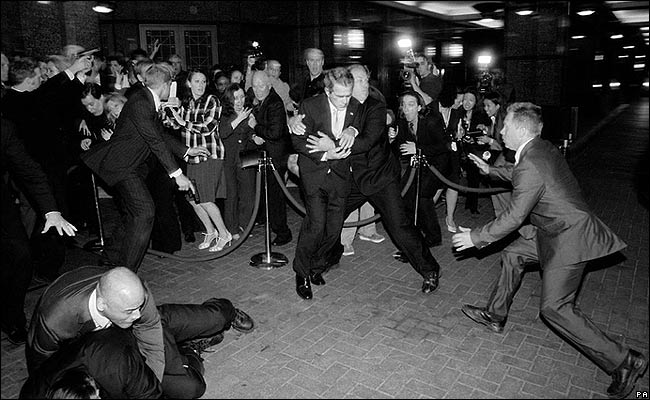
[Explanation here]
I don't know, but it seems kinda like looking in a crystal ball.
Tuesday, September 05, 2006
"It's better than yours."
I'm sorry to do this (for many, many reasons), but you should watch this commercial:
http://www.hardees.com/ontv/milkshake
[You will have to drag the "Cow Shake Off" video from the left-hand column to the viewer.]
There is something indecent about this whole thing. Which is maybe why it's so funny.
Monday, September 04, 2006
The interstate's choked with nomadic hordes
 This summer marks the fiftieth anniversary of the U.S. Interstate System and I have a confession to make: I love interstates.
I recognize that there are many good reasons why the interstates are problematic, but I don't care--I still love them. To tell the complete truth, I am a total interstate geek. I am never happier in a car than when I am on the interstate. I collect interstate trivia. I read atlases and memorize the grid. I have driven through 41 US States-all on interstates. I consider the Interstate System to be the most awe-inspiring construction project in the history of civilization.
Yeah, I'm kinda weird about interstates.
Which is why I love this article in the San Jose Mercury News, which provides glimpses of the social history of California's interstates. And yes, I feel a kinship with Officer Izarras:
On a recent morning in Sacramento, the scene reflected in Felix Izarraras' sunglasses is a video clip of flannel-gray pavement and shiny guardrails. He's a California Highway Patrol officer and also an astute observer of the interstate network -"the most beautiful highway system in the world.''
"The interstates,'' he says, "represent America to me.''
All of which has led me to want to collect some thoughts about interstates:
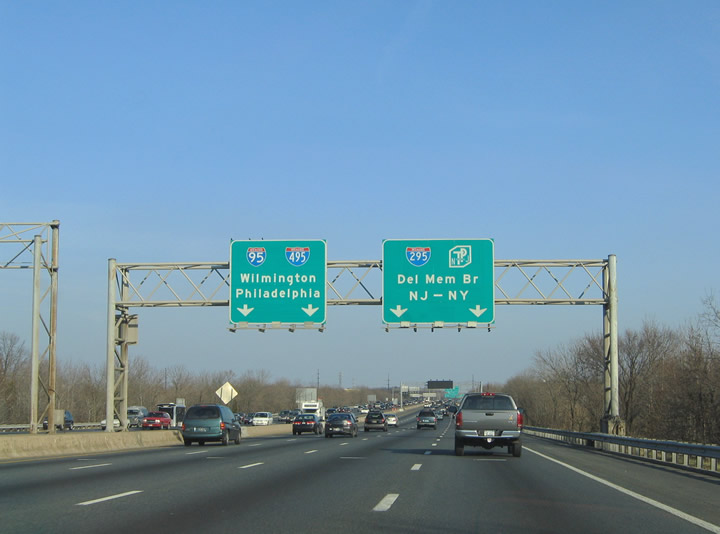 1. My Interstate Achievements. There are two achivements that I am especially proud of:
 - Over the course of my lifetime, I have driven the entire length of I-80, from San Francisco to New York City. I-80, to me, is the East-West backbone of the country--as John McPhee has pointed out, it is an ancient migration route for both humans and animals. It also reveals a fascinating geological cross-section of the country.
- I have driven almost all of I-95, from Daytona Beach to Portland (ME). All I am missing is the strip from Miami to Daytona and the section from Portland to Houlton, ME. I adore 95--it connects all of the power cities on the East Coast: Boston, New York, Baltimore, Washington, Miami. Even when I'm stuck in South Carolina on I-95, I can still feel the metropolitan excitement.
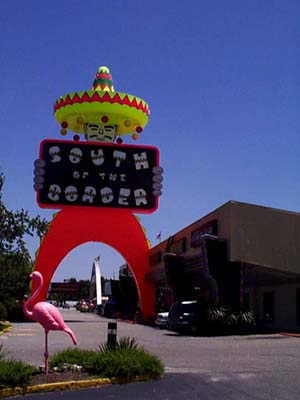
- South of the Border, the racist theme park. In my travels along I-95, I think I've seen almost all of the billboards for this horrible, horrible place. One time I stopped and bought a shot glass--the logo came off in the dishwasher.
Extra fun fact: in his 2001 novel Argall, William T. Vollmann refers to "South of the Border," calling it "Planet Mexico." - Wall Drug
- Cafe Risque. A favorite activity when driving south to Florida: spot the first Cafe Risque billboard. Winner gets a lapdance.
- Little America
- The Great Platte River Road Archway National Monument
- or even, for that matter, that Mormony Temple Thingie
But, sometimes the best part of the interstate is the homogeneity. It turns out that large portions of the country are filled with people who are actively unfriendly to people like me and I don't really want to give these unfriendly people access to me. Or, to put it simply, I don't want to get beat up. Especially in unfriendly territory, the interstate is the safest place for a number of reasons:
- State Police are less likely that local police (or sheriffs, yikes!) to be dangerously prejudiced.
- There are usually lots of other motorists nearby.
- Food and gasoline are usually readily available, without the possibility of getting lost.
- The locals that you interact with (at gas stations or fast food places) are more likely to be used to interacting with out-of-towners.
- You can drive really fast.
 4. I-99 is evil and must be stopped. The numbering system is one of the things that I most admire about the interstates--it's so elegantly logical. But, then there is the abomination known as I-99. According to the system, such a road must be located to the east of I-95, and yet it is not. It's in Central Pennsylvania. This is unacceptable.
 I know the explanation, but it still rankles.
5. The Best Song for Self-Conscious Driving on the Interstate. While there are many excellent songs for interstate driving, I'm going to recommend Bruce Springsteen's "Open All Night." Here's a representative verse:
Early north Jersey industrial skyline I'm a all-set cobra jet creepin' through the nighttimeRead the rest of the lyrics here.
Gotta find a gas station, gotta find a payphone this turnpike sure is spooky at night when you're all alone
Gotta hit the gas, baby. I'm running late, this New Jersey in the mornin' like a lunar landscape
6. The Problems with Interstates in Indiana. Regular readers know that I have little but contempt for the state of Indiana. Here are two good reasons why:
- I was born and raised in Rust Belt, Michigan, a town close to the Indiana border. Ever since I can remember, people have been complaining about the unconscionably long commute between South Bend and Indianapolis. The distance between these two cities (the largest and fourth largest in the state) is 138 miles, yet the drive usually takes in excess of 3 hours on the non-limited-access US 31:
Ask nearly anyone around Indiana about the drive on U.S. 31. Without hesitation, most will recount how they dread driving between Indianapolis and South Bend. They generally are puzzled that such a busy highway includes unexpected obstacles such as railroad crossings without overpasses, side roads with stop sign access and most of all, those endless stop lights!
The US 31 Coalition (source of the above quote) wants to do something about this, but, due to an incredibly corrupt and petrified political establishment (and, perhaps, due to the fact that South Bend is one of the few borderline Democratic areas in a very red state), there has been little progress in the last 25 years. Unbelievable. - The Indiana portion of Interstate 80/90 aka the Indiana Toll Road has been sold to a private firm. Well, actually, it has been "leased"--but for 75 years (which makes the sold/leased distinction entirely irrelevant for those of us who plan to die sometime before then). This idea was the brainchild of Governor Mitzi Daniels (who is clearly that kid that everyone hated in high school--not because he was smart, but because he was super creepy). The private firm gets to collect (and raise!) tolls on the road for the next 75 years, and the State of Indiana gets 2.8 billion dollars up front.
Now I'm no expert on public works financing, but does this seem like a ripoff to you? Was this really the only way for the Tiny Governor to raise 2.8 billion dollars? Don't states sell municipal bonds anymore?
On the one hand, Lolita would be an entirely different (and definitely inferior) novel in the era of the interstate.
 On the other hand, it would be hard to imagine the oeuvre of Bruce Springsteen without the influence of the interstate highway. In fact, as NPR has pointed out, rock and roll owes a great deal to the interstate.
 But, on the one hand, the interstate must be held responsible for Sammy Hagar's "I Can't Drive 55."
Some other interstate-inspired artistic creations:
- Death Cab for Cutie, "405"
- Beverly Cleary's Dear Mr. Henshaw
- John Mayer, "Why Georgia"
- several novels by Bret Easton Ellis
8. The Future of the Interstate. What will interstates be like in the future? Well, for one thing, they'll be run by robots or something.
And when can you expect a new interstate to open near you? Find out here.

 Posts
Posts


